Whether someone buys online, on their phone or at the box office, the ticketing experience should be clear and easy to navigate. For the organization behind the event, a ticketing platform should also help staff manage sales, understand audiences and build relationships beyond a single purchase.
Organizations of all kinds, from performing arts to sports to higher education, need a ticketing platform that supports their operational needs and audience experience. But how can you tell what kind of platform is most beneficial for your organization and what are the features of the best ticketing solution?
What is an Events Ticketing Platform?
An event ticketing platform is software that helps organizations manage ticket sales and related operations. A box office ticketing platform is a digital solution that empowers ticketing professionals, executive directors, fundraisers, and marketers at live event organizations to design, execute, and monitor their ticketing processes, including selling tickets online.
Regardless of whether you sell tickets online, at your venue, or both, an event ticketing platform provides the resources, insights, and technology to manage ticketing and sales processes from a centralized location. There is a spectrum of solutions, so it’s important to understand the variety of features available to determine which kind of ticketing solution is right for your events.
Features of the Best Events Ticketing Platform
There are a wide range of factors that contribute to a great ticketing platform. Understanding these important features will be essential in selecting the best platform for your business or organization.
Streamlined box office ticketing
An essential feature of the top ticketing solutions is a streamlined box office ticketing platform. Ticketing professionals know that intuitive software that’s easy to learn on the back end and easy to use on the front end makes all the difference. The right software helps box office staff process walk-ups quickly with a few simple steps and reduce wait times. Not only should it expedite in-person purchases, but it should also provide a user-friendly customer experience on both desktop and mobile devices.
An easy online purchase experience
Your ticketing platform should make it easy for customers to find an event, select tickets and complete their purchase. Look for mobile-friendly checkout, clear pricing and accessible purchasing options that help people buy with confidence.
Convenient ticket delivery matters, too. Digital tickets and mobile wallet options can help customers keep their tickets accessible and arrive ready for entry. Consider the full journey from purchase confirmation to scanning at the door.
Fully customizable and configurable to your needs
The needs of every organization are different, and your ticketing solution should be flexible to the nuances of your industry and business. Whether your business supports multiple resident companies or you’re a college campus with a variety of ticketed events, you need to be able to configure your platform to your unique needs. Look for flexibility in areas such as seating, ticket types, pricing, packages and staff permissions, based on the events you run.
Your brand should also remain front and center throughout the buying process. Look for options to carry your organization’s identity from the event page through checkout and purchase confirmation.
Designed for your industry
Some organizations in specific industries can benefit from a ticketing program that is designed with their areas of business in mind. For example:
- Performing arts organizations have a number of elements of the ticketing process that could be streamlined through a theater ticketing platform, including flexible subscription packages, targeted marketing campaigns, membership programs and more.
- Colleges and universities could benefit greatly from a campus ticketing platform that can integrate all campus events, such as theater and intercollegiate athletics into one control center.
- Museums and attractions also have unique factors that could be improved through an attractions ticketing platform, such as frequently changing exhibits, cultural community engagement, and timed reservations.
CRM integration and customer engagement
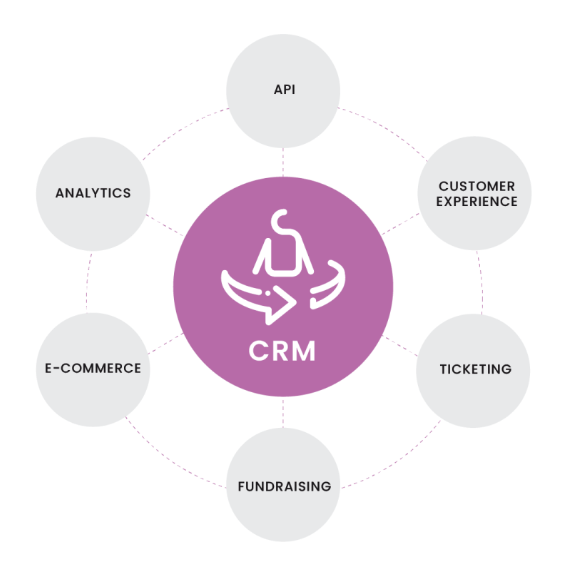
An integrated customer relationship management (CRM) tool helps your team understand the people behind each purchase. Connecting ticket purchases, attendance, donations and memberships in a patron profile can give staff a more complete view of someone’s relationship with your organization.
That information can help you recognize returning attendees, identify potential supporters and tailor communication to their interests and activity. Look for a platform that makes audience data easy to access and use across departments.
Marketing
As mentioned earlier, the face of your ticketing experience should be your brand, rather than the ticketing vendor. With the right platform, you’ll have the tools to maintain consistent branding throughout the entirety of the purchase experience.
However, the right platform will go beyond branding. Using the CRM data mentioned above, a ticketing platform should also offer integrated marketing capabilities or connections to your marketing tools to facilitate ongoing engagement with fans and customers. Look for ways to segment audiences based on purchases, interests and engagement, then use those segments to deliver relevant invitations, reminders and follow-up messages.
Fundraising
The fundraising capabilities of your ticketing solution should cater both to the important supporters you already have, as well as prospective donors. Connected giving histories and patron profiles can help your team recognize recurring donors, understand their support and tailor future appeals.
In addition to existing contributors, the platform should help you cultivate non-donors to become recurring donors and advocates for your organization. Look for options to invite a gift during checkout, support standalone donation campaigns and connect giving activity with ticket purchases. This can help your team understand how an attendee’s relationship develops into broader support.
Secure payments and fraud protection
A ticketing platform should support secure payment processing and help your team respond to suspicious purchasing activity. When evaluating providers, ask how they address payment fraud, bot activity and unwanted bulk buying, and which controls your staff can manage.
Protection should also support a smooth experience for legitimate customers. Look for tools that help your team assess risk and respond appropriately without adding unnecessary barriers to every purchase.
Reporting
Your event ticketing platform should empower you to continue to improve ticket sales, marketing efforts, and customer engagement by offering reporting and insights. Look for clear, accessible reports that help departments answer practical questions: Which events are selling well? Who is returning? How are donations and memberships contributing to revenue?
Timely reporting should help your team act on what it learns, whether that means adjusting a campaign, identifying an audience segment to reengage or planning future programming. Check how easily staff can filter, share and export the information they need.
What Is the Best Events Ticketing Platform for My Organization?
The best ticketing platform for your organization is one that fits your events, team and goals. Use the features above as a starting point, then consider how each solution would support your day-to-day work.
Operational needs and room to grow
Organization size is one consideration, but it doesn’t tell the whole story. A small team may manage complex subscriptions, fundraising and multiple venues, while a larger organization may prioritize a straightforward process across a high volume of events.
Consider your event types, sales volume, staffing, integrations and reporting requirements. Look for a platform that supports the work you do today and can accommodate future plans, such as adding a venue, introducing memberships or expanding your marketing.
Industry
Certain business sectors may benefit from a ticketing solution that is designed uniquely for a specific industry. For example, higher education institutions may manage ticketing across several departments and audience groups. Tickets to academic or campus-related events are typically separate from athletic events. Some events on campus require proof of college identification during the ticket purchasing process.
Colleges and universities can benefit from a campus ticketing platform that is tailored to a diverse customer population of local residents and students, integrates unique ID authentication, and collects all event information in one centralized location.
Implementation, support and cost
A platform’s features are only part of the decision. Ask what implementation involves, how existing data will be migrated and what training your team will receive. Understand the support available during everyday operations and busy on-sales.
Review the full cost, too, including payment processing, optional capabilities, integrations and services. This helps you compare providers based on the support and functionality your organization actually needs.
Bring in the experts
Even after breaking everything down, it can still be daunting to determine the best kind of ticketing platform for your organization. The experts at AudienceView can learn about your events, workflows and goals, then help you explore capabilities that fit your needs.
Before a demo, prepare a few questions:
- Can buyers easily purchase tickets on mobile?
- Can staff see ticket purchases, attendance and giving in one patron profile?
- How easily can we build audience segments and use them in marketing?
- How does the platform connect with our existing tools?
- What do setup, training, support and total costs include?
How AudienceView Revolutionizes the Ticketing Platform
The ultimate ticketing platform solutions from AudienceView are designed to not only address each element of the best platforms above, but to take them to the next level with easy-to-use, highly integrated technology.
AudienceView brings together ticketing, fundraising, marketing, payments, CRM and reporting capabilities to help organizations connect their operations with their audience experience.
That connection helps teams look beyond individual transactions. Ticket purchases and giving activity can inform a fuller understanding of patrons, while audience insights can guide more relevant communication and reveal opportunities to encourage repeat attendance and support.
AV Digital Marketing can also help teams use connected audience data to create segments and deliver more relevant email and SMS campaigns.
Whether you manage performing arts, live music, festivals, museums, attractions or campus events, the right combination of capabilities should reflect your organization’s workflows and goals.
Choose the Right Events Ticketing Platform with AudienceView
Choosing a ticketing platform starts with understanding what your audience and staff need. Evaluate how each option supports the purchase experience, connects audience information and helps your team manage events and build lasting relationships.
To learn how AudienceView can improve your ticketing experience and discover the best ticketing solution for your organization, take a free product tour.