AudienceView
vs.
Spektrix
Two leading platforms for theatre and arts organizations, with different approaches to data connectivity, marketing attribution, fundraising, and long-term growth.
Find Your Best Fit
Compare AudienceView and Spektrix across ticketing, CRM, marketing, fundraising, reporting, and scalability to determine which platform best fits your organization.
Spektrix may be a fit if you:
- Are primarily looking for ticketing and CRM software for a theater or arts organization.
- Have workflows centered on box office operations, with marketing handled separately.
- Are comfortable using multiple tools for email, fundraising, and reporting.
- Have time to manage manual segmentation and reporting processes.
- Prefer a system optimized primarily for operational control rather than broader audience and revenue growth.
AudienceView may be a fit if you:
- Want a complete event management platform, not just ticketing software.
- Need to connect marketing, ticketing, CRM, and fundraising in one central platform.
- Are focused on increasing ticket sales, subscriptions, and donations.
- Want to track exactly which campaigns drive revenue, with every interaction tied to a single, unified record.
- Are moving away from fragmented tools toward a connected system where audience data, behavior, and revenue live in one place.
| CAPABILITY | SPEKTRIX | AUDIENCEVIEW |
|---|---|---|
| Implementation and Time to Value | Typically longer implementation timelines | Guided onboarding, with many organizations going live in approximately 18 days |
| Unified Platform | Core ticketing and CRM, with additional tools or workarounds sometimes needed for broader operational coverage | Ticketing, CRM, marketing, fundraising in one system |
| Reporting and Data Accessibility | Reporting often requires exports or complex setup | Real-time, flexible reporting tied to patron records |
| Subscription Management | Limited flexibility for complex subscription models | Advanced, flexible packages with rollover options |
| Fundraising and Donations | Donation and membership workflows can be complex | Built-in donation tracking, campaigns, and insights |
| Marketing Automation | More manual segmentation and campaign setup | Behavior-based segmentation tied to ticketing data |
| API and Integrations | Supports integrations with select tools, though flexibility can vary depending on setup | Robust, flexible APIs and integrations, supporting a connected event ecosystem |
| Multi-Venue Operations and Scalability | Commonly used by individual arts organizations and venue teams | Built to support centralized operations across multiple venues, programs, and departments |
| Audience Growth Tools | No native audience network; growth relies on internal marketing efforts | Built-in access to audience networks like TheaterMania and WhatsOnStage, with exclusive perks |
Capabilities
Marketing & Audience Growth
Arts marketing teams need to connect campaign activity with ticket revenue, but disconnected tools and data can make that difficult.
Spektrix supports segmentation and campaign execution, including through integrations such as dotdigital. Depending on the organization’s setup, connecting campaign engagement with ticket revenue may require additional configuration, reporting, or reconciliation.
AudienceView connects marketing directly to ticketing, fundraising, and patron data in one system, enabling behavior-based segmentation and automated campaigns tied to real revenue outcomes.
With built-in audience development tools and partnerships, teams can both optimize existing audiences and actively grow new ones, including access to promotional opportunities through TheaterMania and WhatsOnStage, with exclusive benefits available to AudienceView customers.
THE IMPACT: MARKETING BECOMES A MEASURABLE REVENUE DRIVER, NOT JUST A COMMUNICATION TOOL
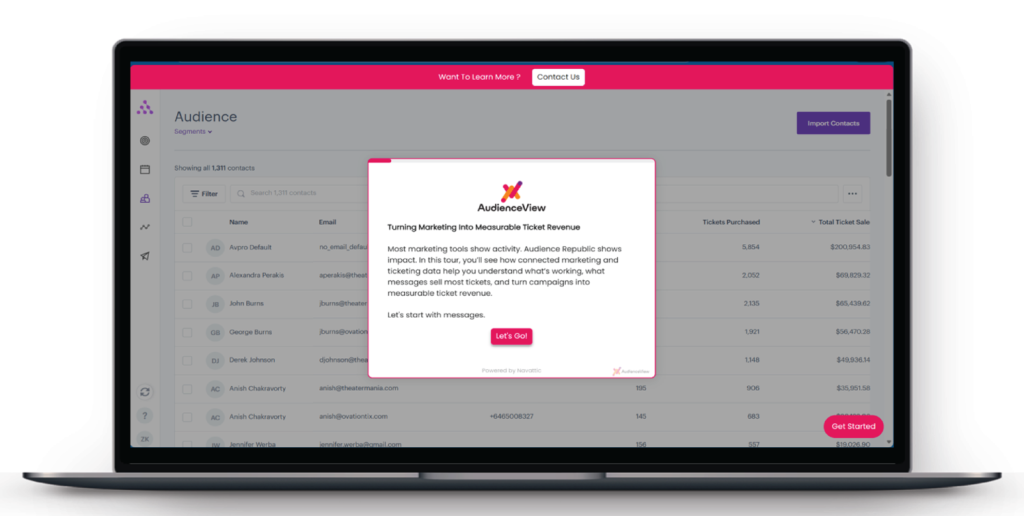
Turning Marketing Into Measurable Ticket Revenue
With Spektrix, we have to manually add up the value of each campaign instead of being able to get the value at a glance. Our old system made that information easier to access without the manual work.
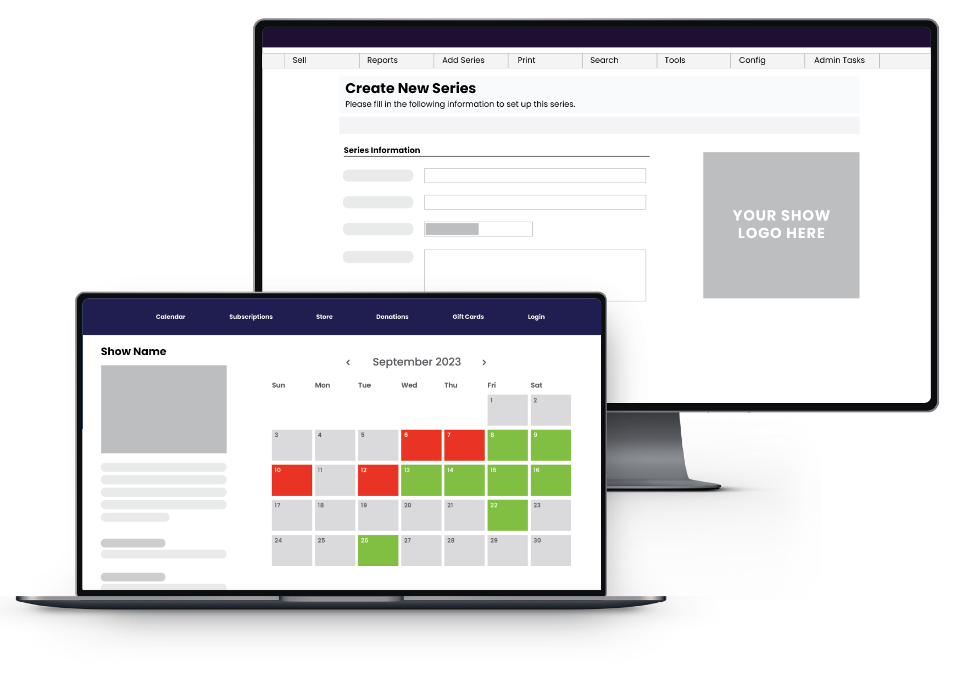
Reporting & Revenue Visibility
Teams need fast, clear answers about revenue, campaigns, and patron behavior – but many systems make reporting feel slow, fragmented, or overly technical.
Spektrix reporting can feel inconsistent across modules, often requiring users to export data into Excel to fully analyze it. Some users report relying on Excel or CSV exports to analyze information across report types, particularly when they want to customize outputs or move directly from a report into a customer record.
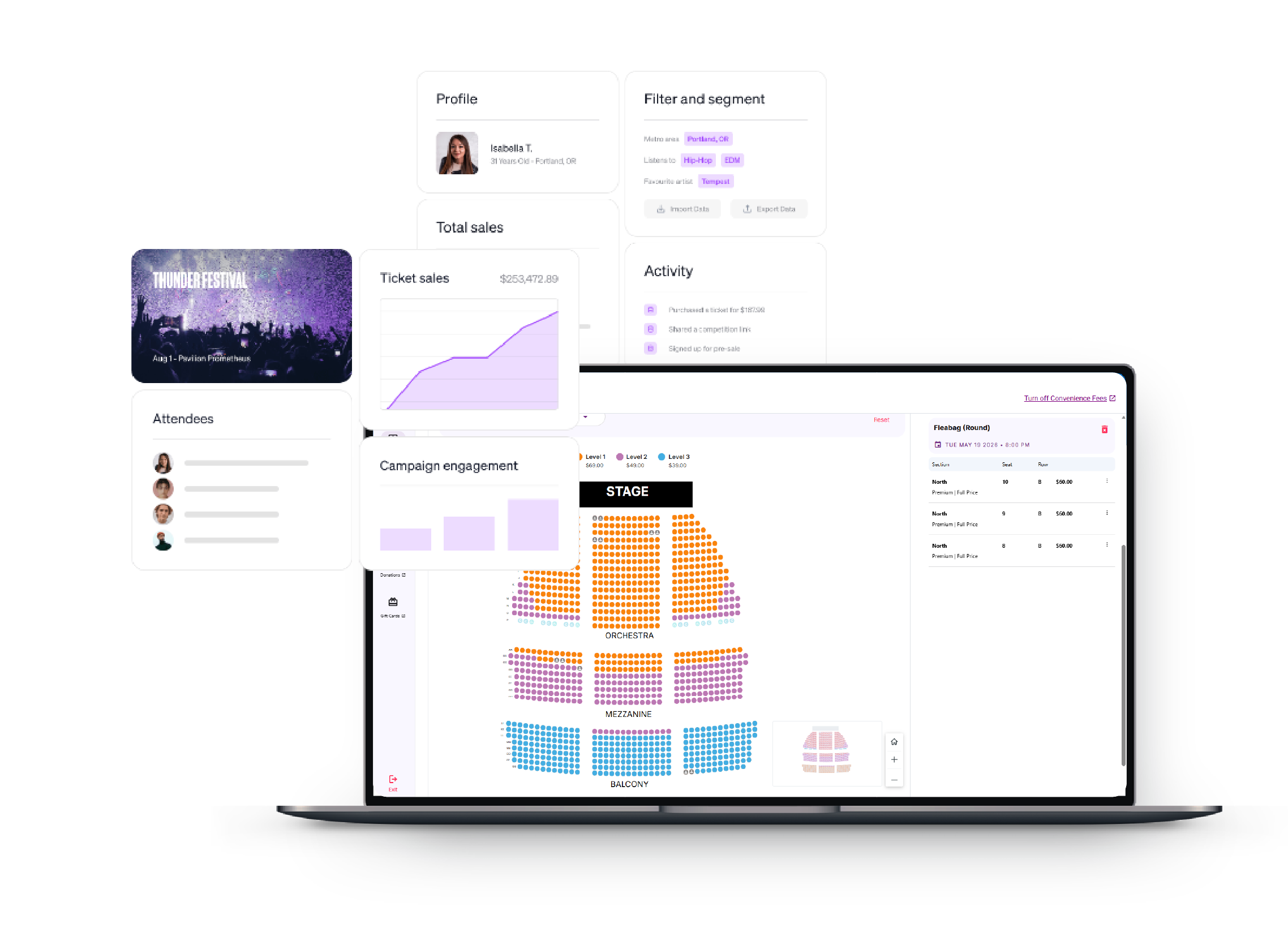
AudienceView provides real-time, flexible reporting directly within the platform, fully connected to ticketing, marketing, and fundraising data. Users can drill into reports and move seamlessly into patron records, making it easier to act on insights without leaving the system.
THE IMPACT: REPORTING BECOMES A DECISION ENGINE, HELPING TEAMS MOVE FASTER AND CONNECT PATRON ACTIVITY, CAMPAIGNS, AND OPERATIONAL DECISIONS TO REVENUE.
Reporting in Spektrix is a lot more complicated than it needs to be. The criteria to pull reports are not consistent through all types. They get pulled into Excel or CSVs when we would much rather open them in the system itself, so we can click into customer records.
Subscriptions, Memberships & Donations
Recurring revenue streams like subscriptions and donations require flexibility, but many systems struggle to support complex models.
While subscriptions and memberships are supported in Spektrix, more complex setups can require manual configuration and workarounds. Some organizations may need additional reporting or configuration to track giving, pledges, and supporter activity in the way their development teams require.
AudienceView offers flexible subscription models, including rollover capabilities, alongside integrated donation tracking and fundraising tools. Teams can easily track patron value and giving history within a single, unified system.
IMPACT: WITH ALL DATA CONNECTED TO ONE SYSTEM, TEAMS CAN BUILD STRONGER RELATIONSHIPS AND INCREASE LIFETIME VALUE.
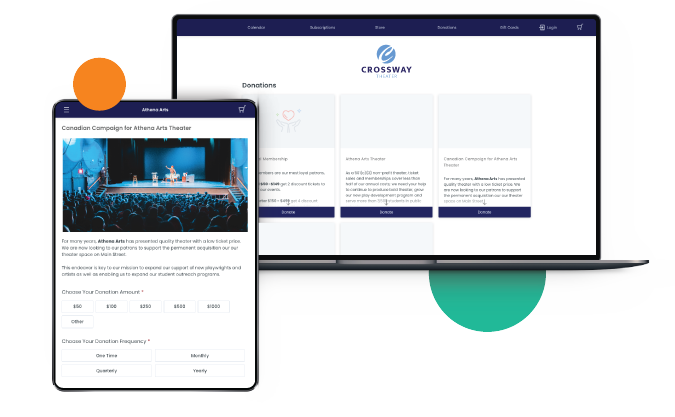
Spektrix’s membership features are not geared towards donations and is complicated to set up. There is no standard feature to show how much a customer has given in a fiscal year, and requires a complex reporting process when I used to be able to pull all information from a customer record.
It’s a bit frustrating that Spektrix is so different across its US, UK, and Canadian versions, especially when it comes to automation of communications and receipting.
Multi-Venue & Organization Scalability
As organizations grow, they may add venues, brands, programs, and departments. Systems need to scale without creating silos or duplicating work.
Spektrix is well-suited for individual organizations, but managing multiple venues or entities can introduce complexity in how data, reporting, and operations are structured. Teams may need to rely on separate configurations or processes, which can make it harder to maintain a unified view across the organization.
AudienceView is built to support multi-venue and multi-entity operations within a single platform. Teams can centralize data, reporting, and workflows while maintaining flexibility across individual venues or programs.
THE IMPACT: ORGANIZATIONS GAIN A UNIFIED VIEW OF PERFORMANCE ACROSS ALL VENUES, MAKING IT EASIER TO SCALE OPERATIONS, SHARE INSIGHTS, AND GROW WITHOUT ADDED COMPLEXITY.
User Experience & Team Productivity
Most arts organizations don’t have technical teams. Their systems need to be intuitive for box office, marketing, and development teams.
While powerful, Spektrix can have a learning curve, with some users reporting that certain workflows and reporting processes are not always intuitive. Teams may rely on training or support to complete tasks, and multi-step processes can slow down day-to-day operations.
AudienceView is designed for box office, marketing, and development teams, with streamlined workflows that reduce manual effort across departments. Its intuitive interface allows teams to get up and running quickly, without requiring specialized technical or system-administration expertise.
IMPACT: TEAMS SPEND LESS TIME LEARNING THE SYSTEM AND MORE TIME FOCUSING ON DELIVERING GREAT EXPERIENCES AND DRIVING REVENUE.
How AudienceView Data Works in Audience Republic
We use Spektrix, and one of our team members commented “I have a theatre degree, not an IT degree.” I’m sure most theatres can relate to not having people on staff who have a strong background in tech/IT. With that said, I’m looking into alternatives
The data conversion with AudienceView was seamless; the training was comprehensive and easy to follow; our team integrated AudienceView into our daily operations without interruption.
Implementation & Time to Value
Switching systems can be time-consuming and disruptive, delaying the ability to see value.
Spektrix implementations can take several weeks or longer, depending on the complexity of the organization and setup requirements. This can extend the time it takes for teams to fully adopt and benefit from the system. Some organizations also report slower product evolution over time, alongside rising costs, making it harder to justify ongoing investment as needs grow.
AudienceView provides guided onboarding, with many organizations going live in approximately 18 days when customer-controlled delays are excluded. The platform is structured to minimize disruption while accelerating time to value.
THE IMPACT: ORGANIZATIONS CAN TRANSITION MORE QUICKLY AND START SEEING RESULTS SOONER, WITHOUT PROLONGED OPERATIONAL DISRUPTION.
Why a Connected System Matters
Many organizations operate with separate tools for ticketing, email marketing, fundraising, and reporting. On the surface, this works. But behind the scenes, it creates friction:
- Marketing teams can’t easily see what drives ticket sales
- Attendee data becomes fragmented across systems
- Reporting requires manual exports and reconciliation
- Opportunities for personalization and upsell are missed
The result is not only added inefficiency, but also a greater risk of missed revenue opportunities.
- Every campaign can be tied directly to ticket revenue
- Segmentation is based on real purchase behavior, not static lists
- Teams can automate campaigns based on how attendees actually engage
- Leadership gets a clear view of what is working and what is not.
This is the shift from managing operations to actively driving growth.

You’re In Good Company
Organizations choose AudienceView to simplify operations, modernize ticketing, strengthen fundraising, and connect customer data across teams.








Many organizations operate this way, but it creates blind spots. When systems aren’t connected, it’s difficult to see what actually drives ticket sales or donor engagement. A unified platform removes that guesswork by tying every interaction back to revenue.
AudienceView delivers both flexibility and connectivity, with best-in-class marketing capabilities designed specifically for live events. Teams can gain greater connectivity without sacrificing the flexibility needed for more sophisticated campaigns.
AudienceView provides guided onboarding, with many organizations going live in approximately 18 days when customer-controlled delays are excluded.
AudienceView combines ticketing, CRM, marketing, fundraising, and reporting within one connected platform, helping organizations reduce duplicated data, manual exports, and reliance on disconnected systems.
AudienceView is designed for non-technical box office, marketing, and development teams, with guided onboarding and workflows that can be configured around the organization’s needs.
AudienceView enhances reporting by connecting it directly to detailed patron and revenue data, helping teams access insights faster and act on them more confidently.