AudienceView
vs.
ThunderTix
Two platforms trusted by arts and live event organizations — built for very different approaches to scale, data, and long term audience growth.
Find Your Best Fit
Compare AudienceView and ThunderTix across ticketing, CRM, marketing, fundraising, reporting, and long-term scalability to determine which platform best fits your organization.
ThunderTix may be a fit if you:
- Are a small to mid-sized organization with straightforward ticketing needs
- Primarily need reliable box office tools for selling tickets online and in person
- Value quick setup and operational simplicity
- Are comfortable using basic CRM and email features for patron communication and fundraising
- Do not need enterprise-level, cross-department analytics or automated donor/CRM workflows
AudienceView may be a fit if you:
- Need ticketing, CRM, marketing, fundraising, and reporting working together
- Run subscriptions, flex passes, memberships, or donation programs
- Want to understand patron behavior across every interaction, not just ticket sales
- Serve multiple programs, venues, or departments
- Are planning for long-term growth, not just immediate ticket sales
- Need a platform that helps you increase revenue beyond ticket sales
| CAPABILITY | ThunderTix | AUDIENCEVIEW |
|---|---|---|
| Platform Foundation | Ticketing-first platform with built-in box office, communication, and fundraising tools | Connected event commerce platform built around shared patron and transactional data |
| Core Focus | Accessible ticketing and day-to-day box office operations | Ticketing, CRM, marketing, fundraising, payments, and reporting across the patron lifecycle |
| Ease of use | Simple, box office friendly | Intuitive workflows designed for non-technical teams |
| Onboarding and Time to Value | Self-service account creation and independent product testing | Guided evaluation and hands-on onboarding, with some organizations launching in only a few days |
| Pricing Model | Subscription plus per-ticket fees | All-in-one pricing |
| Reporting & Analytics | Built-in sales and patron attendance reports | 25+ pre-built reports with real-time, cross department capabilities |
| CRM & Customer Profiles | Patron records covering contacts, ticket purchases, donations, memberships, and communication history | Unified patron records connecting ticketing, donations, memberships, marketing engagement, and broader lifecycle activity |
| Donation & Revenue Streams | Built-in donation and membership features | Fundraising, donations, and memberships integrated directly into CRM |
| Marketing & Segmentation | Built-in email tools for reminders and straightforward patron communications | Native email and SMS marketing, dynamic segmentation, automated journeys, and revenue attribution connected directly to ticketing and patron data |
| Scalability | Well-suited for simple operations, some difficulties with scale | Built to support organizational growth, complexity, and multi-department teams |
| Customization + Brand Control | Limitations around self-service seating charts and front branding flexibility | Manage seating, products, and purchase experiences in one system – highly flexible front-end brand configuration |
| APIs, Integrations, and AI | Promotes a customer-accessible MCP connector for supported ticketing and operational queries | Has developed an MCP connector on top of its reporting APIs to support more intuitive, natural-language reporting |
Capabilities
Donations & Revenue Streams
For arts organizations, donations and memberships are often mission-critical revenue streams. Even small percentage fees on donations can add up over time, making it harder for teams to forecast revenue and maximize the impact of supporter contributions.
ThunderTix uses a subscription pricing model with additional fees applied to certain revenue types. Donations and merchandise are charged a percentage fee when processed by credit card, which some users note as a trade-off when compared to ticket fee structures.
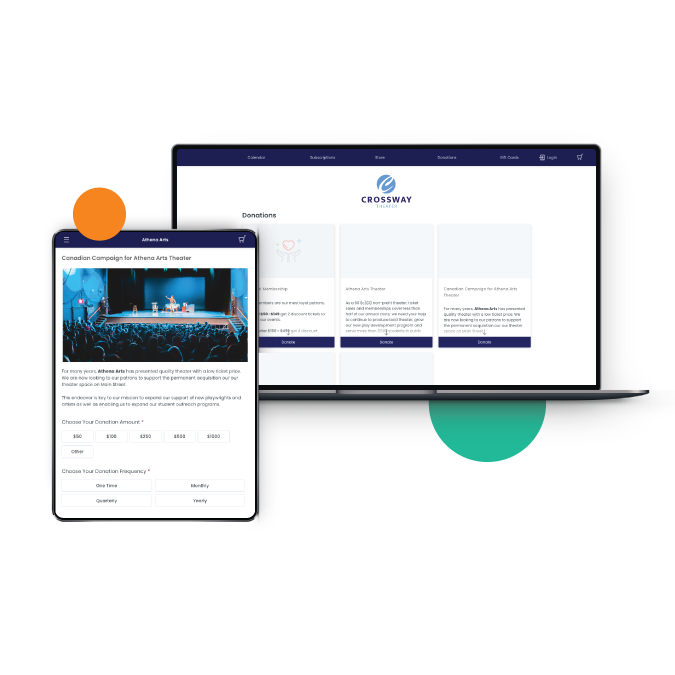
AudienceView includes donations, memberships, merchandise, and gift cards as part of its platform pricing, without additional platform fees applied to those revenue streams.
THE IMPACT: Organizations gain clearer revenue forecasting while ensuring more of every supporter contribution goes toward advancing their mission.
I don’t love some of the ThunderTix fee structures outside of ticket purchases (percentages of donations, etc)”
Customization, Branding & Control
As organizations mature, the ability to control seating configurations, branding, and front-end presentation becomes increasingly important – both for internal efficiency and for delivering a consistent patron experience.
ThunderTix provides structured tools for event setup and seating, but some users note limitations around self-service seating chart edits and front-end branding flexibility, particularly when managing multiple or changing venue layouts.
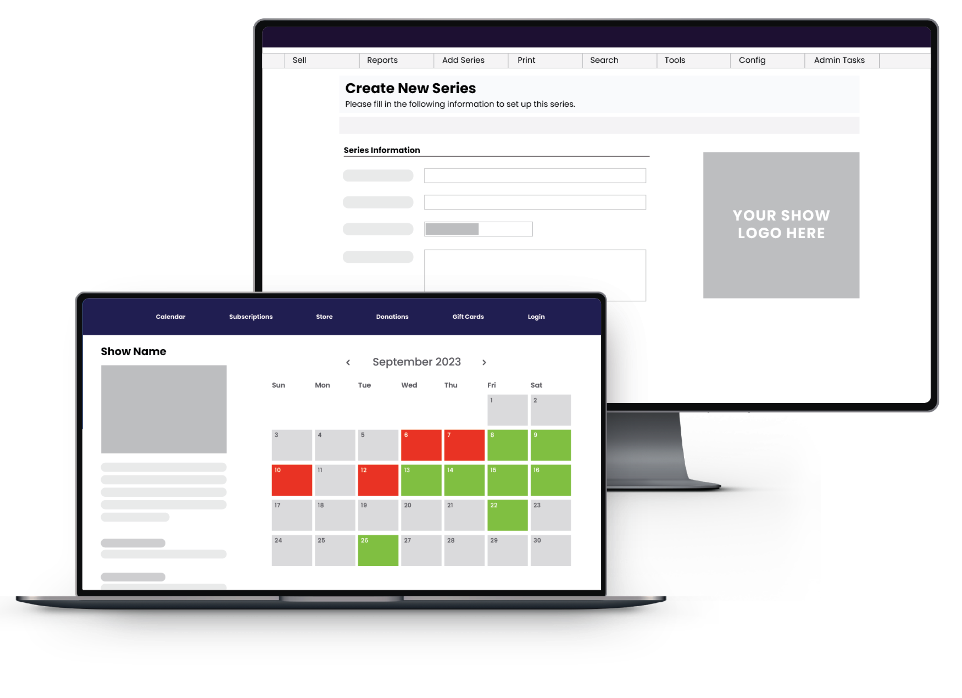
AudienceView is built as a unified event commerce platform, enabling teams to manage seating, products, and purchase experiences in one system, with greater flexibility over branding and front-end presentation as needs evolve.
THE IMPACT: STRONGER PATRON TRUST AND PROFESSIONAL FRONT-END EXPERIENCE FROM FIRST CLICK TO CURTAIN
I wish I was able to customize the landing page a little bit more and make it feel like part of my brand. When guests use ThunderTix, they are very clearly leaving my organization and being routed to a third party, I would like to make it less obvious
Scalability & Organizational Fit
A system that works well for smaller or single-programme organizations may face limitations as complexity increases through additional venues, departments, or reporting requirements.
ThunderTix is frequently described by users as a strong fit for smaller to mid-sized organizations, offering robust ticketing capabilities without the overhead of enterprise-level complexity. Some users note that it may be less suited to large, multi-org, or highly customized environments.
AudienceView is built to support complex growth, with architecture designed for multi-venue, multi-program, and multi-department organizations operating from a shared data and reporting layer.
IMPACT: A PLATFORM THAT FITS TODAY BUT CAN’T FLEX TOMORROW CREATES COSTLY MIGRATION FEES DOWN THE ROAD.
• “[We Chose AudienceView because] we wanted something “industry standard” that new job applicants might already know, and something that could grow with us.
Patron Data & CRM Depth
Ticket sales generate valuable customer data, but individual transactions only show part of the relationship. Marketing engagement, subscriptions, memberships, donations, attendance, and purchasing behavior all provide important context.
ThunderTix maintains customer records connected to ticket purchases, donations, memberships, and patron communications.
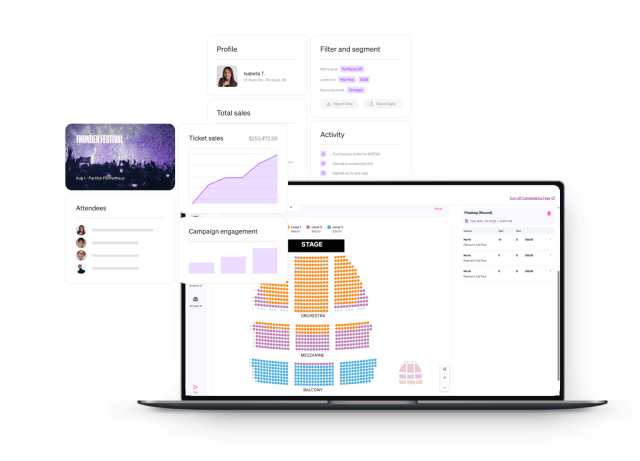
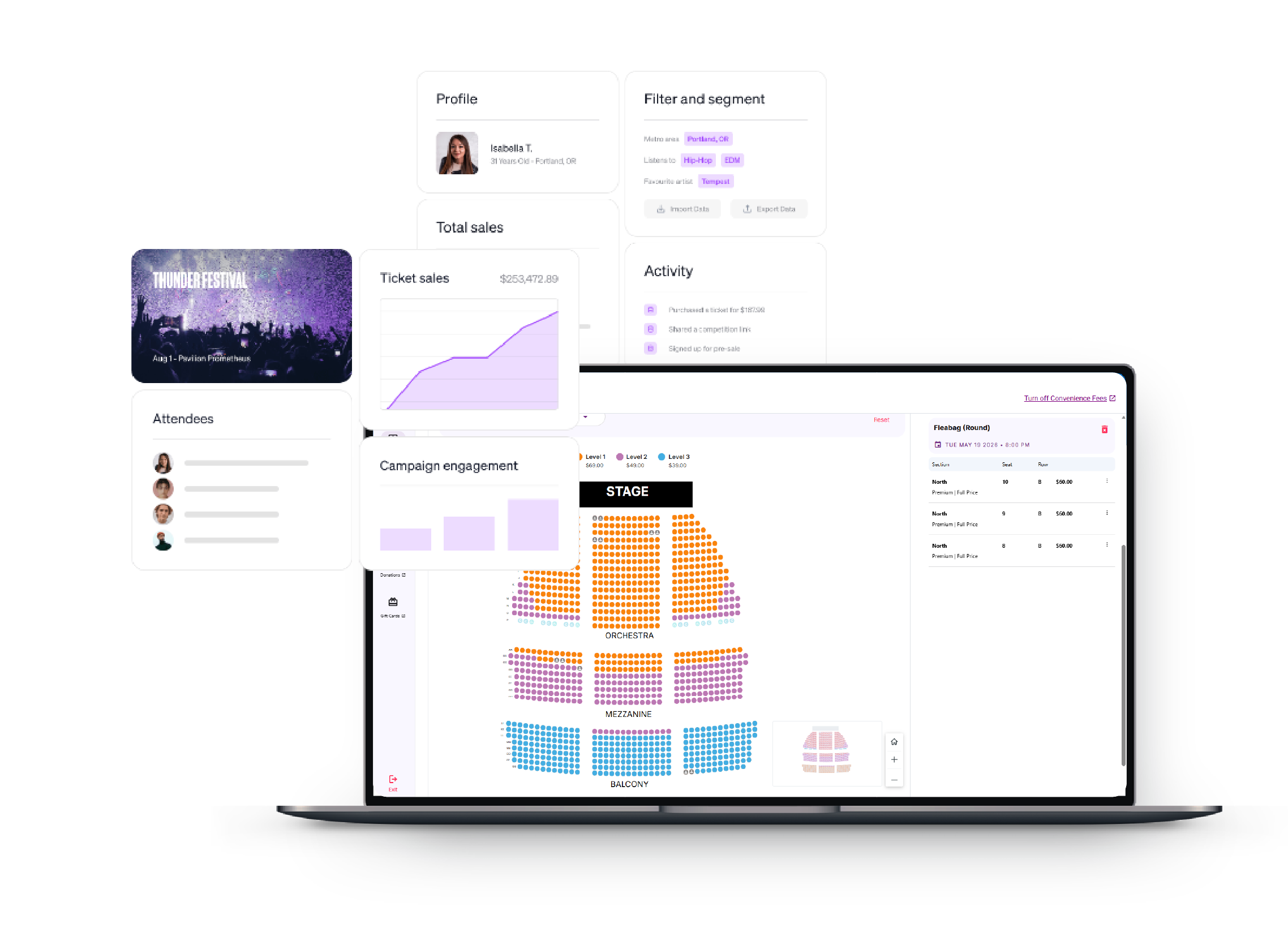
AudienceView connects activity across ticketing, CRM, marketing, fundraising, memberships, and subscriptions into a shared patron profile. Marketing, box office, and development teams can work from the same underlying audience data while viewing the information most relevant to their roles.
THE IMPACT: TEAMS GAIN A MORE COMPLETE UNDERSTANDING OF EACH PATRON, ENABLING BETTER-INFORMED DECISIONS ACROSS DEPARTMENTS
With ThunderTix, I wish I had the ability to obtain reports of an entire run of a production in a Performance Summary that compared each performance from one production in one document.
You’re In Good Company
Organizations choose AudienceView to centralize revenue, insight and audience relationships – capabilities often limited with ThunderTix.








AudienceView’s Professional product was built specifically for small and mid-sized performing arts organizations, not just enterprise venues. Most of our clients are community theaters, regional arts centers, and nonprofits with lean teams. The platform is designed so non-technical staff can manage day-to-day operations without specialized training. The difference is that as your organization grows, (adding subscription programs, fundraising campaigns, or a second venue) AudienceView grows with you. You don’t have to be complex today to benefit from a platform that won’t limit you tomorrow.
AudienceView is designed to be approachable for non-technical teams, and the complexity can be configured to match your actual workflows. Front-line box office can still live in simple screens; power users can go deeper. Many customers start with core ticketing workflows and expand into CRM, fundraising, and marketing capabilities as their organization grows.
If your reporting covers what you need today, that’s great. The question is whether your box office, marketing team, and development office can all see the same patron from their own angle, in real time, without exporting to spreadsheets. Many organizations outgrow their reporting before they realize it and they start asking questions that cross departments. AudienceView offers 25+ pre-built, real-time reports across ticketing, fundraising, marketing, and CRM, so every team sees the full picture without exporting to spreadsheets.
AudienceView provides a guided evaluation and onboarding experience so your team can assess the platform against its actual operational needs. From there, implementation includes support for data migration, configuration, training, and best-practice setup.
Some organizations have launched with AudienceView in only a few days, while the average implementation is approximately 18 days when customer-controlled delays are excluded.
AudienceView has developed an MCP connector that works with its reporting APIs to support more intuitive, natural-language reporting and data exploration.
This capability is focused specifically on making reporting data easier to query and understand. It is not currently offered as a generally available, customer-configurable product feature.
No. AudienceView includes connected ticketing, CRM, fundraising, reporting, and native marketing capabilities within its event commerce ecosystem.
Organizations can use these capabilities together while also integrating AudienceView with selected external systems when their operational or technology strategy requires it. Integrations provide flexibility, rather than compensating for the absence of core patron-management capabilities.