AudienceView
vs.
Eventbrite
Two platforms used to sell tickets and manage events, with very different approaches to seasons, subscriptions, reserved seating, patron relationships, fundraising, reporting, and long-term growth.
Find Your Best Fit
Compare AudienceView and Eventbrite across ticketing, subscriptions, reserved seating, CRM, fundraising, reporting, and long-term scalability to determine which platform best fits your organization.
Eventbrite may be a fit if you:
- Primarily run one-off, free, or general-admission events
- Want a fast, self-service way to create and publish events
- Rely on a consumer marketplace to help people discover your events
- Have straightforward ticketing and registration requirements
- Manage fundraising, CRM, email, and reporting in separate platforms
- Do not require subscriptions, memberships, donations, or complex season packages
AudienceView may be a fit if you:
- Run a full season or recurring calendar of performances
- Sell subscriptions, memberships, flex passes, or ticket packages
- Need flexible reserved seating and venue management
- Want ticketing, patron CRM, fundraising, marketing, and reporting connected in one platform
- Need a complete view of each patron’s ticketing, donation, membership, and engagement history
- Want to own and manage the patron relationship without relying on a third-party marketplace
- Need clearer cost visibility and reporting that supports operational and leadership decisions
| CAPABILITY | Eventbrite | AudienceView |
|---|---|---|
| Primary Strength | Fast event creation, event discovery, and straightforward ticket sales | Unified ticketing and patron management across a full season |
| Seasons and Subscriptions | Primarily structured around individual events | Native subscriptions, memberships, flex passes, and season packages |
| CRM and Patron Data | Individual event information, with broader CRM workflows supported through integrations or separate systems | Centralized patron records connecting ticketing, attendance, donations, memberships, and engagement across events and seasons |
| Fundraising | Not central to Eventbrite’s core event-ticketing model | Integrated donations, recurring giving, memberships, and donor history |
| Reporting | General event, attendee, ticket sales, and payout reporting | Real-time, fully connected reporting tied to patron records |
| Integrations and Middleware | Connects with external CRM, email, fundraising, and workflow tools, with middleware often needed to support more advanced cross-platform processes | Connected native capabilities reduce reliance on middleware, with integration options available for specialized systems and organizational requirements |
| Patron Relationship | Organizer relationships operate solely within Eventbrite’s marketplace | Organizations manage direct patron relationships across ticketing, marketing, fundraising, memberships, and service |
| Pricing | Transaction and payment-processing fees applied to paid tickets | Pricing based on organizational needs, ticket mix, and volume |
Capabilities
Integrations and Middleware
As organizations develop more sophisticated CRM, fundraising, marketing, and reporting requirements, their ticketing platform may become one part of a broader technology ecosystem.
Eventbrite connects with a wide range of external systems. However, organizations may need connectors or middleware to move information between ticketing, CRM, marketing, fundraising, and reporting tools. This can distribute patron data across multiple platforms and create additional reconciliation work.
AudienceView includes ticketing, patron CRM, marketing, fundraising, memberships, and reporting within one connected platform. Because these capabilities operate from shared patron and transactional data, organizations can reduce their reliance on middleware for core workflows.
AudienceView also supports integrations for organizations that need to connect specialized applications, existing institutional systems, or other strategic technology. Integrations can extend the platform where needed without requiring teams to assemble its essential ticketing and patron-management capabilities from separate tools.
THE IMPACT: Teams spend less TIME MAINTAINING CONNECTIONS BETWEEN CORE SYSTEMS, WHILE RETAINING THE FLEXIBILITY TO INTEGRATE WITH WIDER TECHNOLOGY NEEDS.
Not tracking opt-ins is a blocker for me to communicate with Eventbrite attendees on HubSpot, and I can imagine it’s the same for every organization in countries that regulate data privacy.
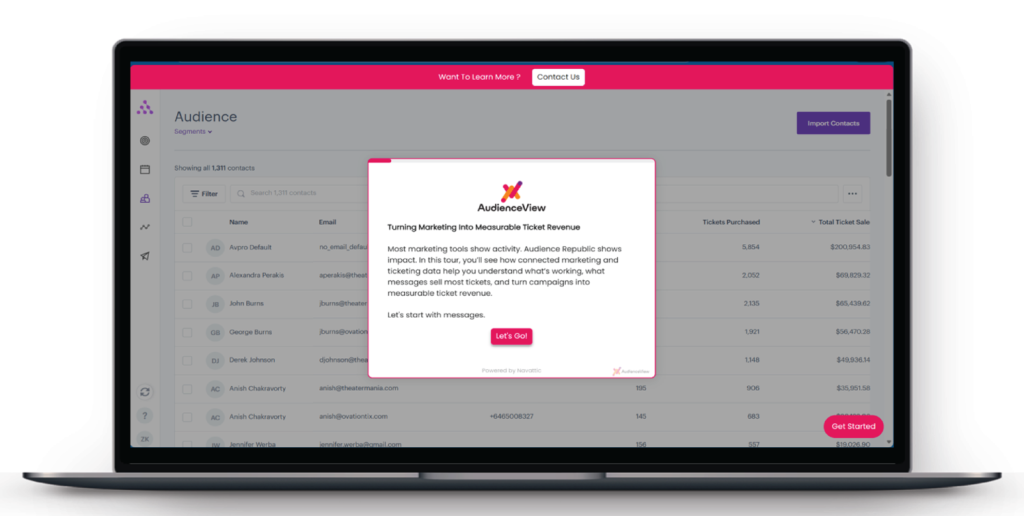
Turning Marketing Into Measurable Ticket Revenue
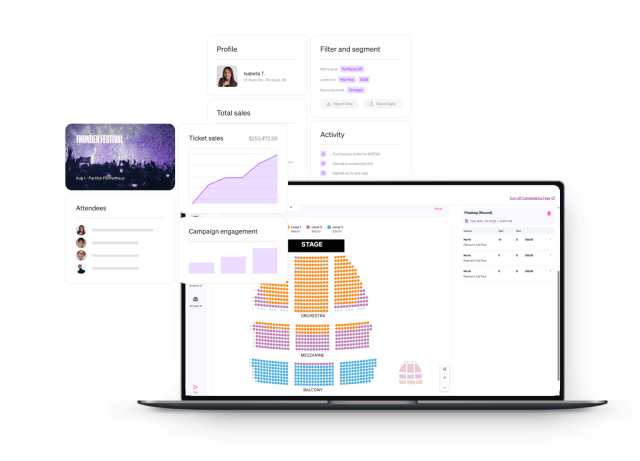
Seasons, Subscriptions, and Reserved Seating
Performing arts organizations do not operate as a collection of unrelated events. A platform designed primarily around individual events can require additional processes as programming, seating requirements, and patron purchase journeys become more complex.
Eventbrite is well suited to quickly creating and selling tickets for standalone events, particularly general-admission, free, or occasional events. Although it supports reserved seating, full-season management, subscription packaging, and membership-based ticketing are not central to its platform design.
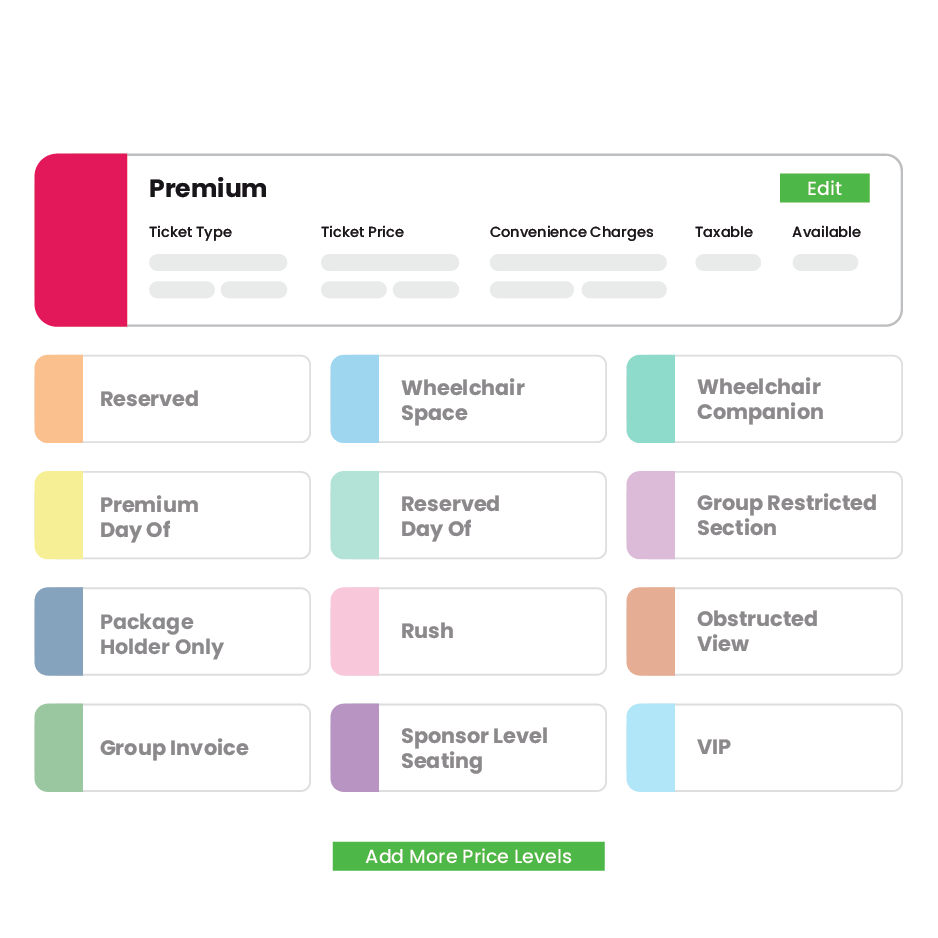
AudienceView is built around recurring performing arts programming. Organizations can manage full seasons and performance series alongside fixed or flexible subscriptions, pick-your-own packages, memberships, and member benefits. Reserved seating, multiple price levels, exchanges, holds, and patron account management are connected within the same ticketing and patron-management experience.
THE IMPACT: YOUR TICKETING OPERATION CAN BE ORGANIZED AROUND COMPLETE SEASONS, PROGRAMS, AND PATRON RELATIONSHIPS RATHER THAN A ONE-EVENT-AT-A-TIME WORKFLOW.
Customization options for event pages and registration forms are limited on Eventbrite compared to more advanced event management platforms.
CRM and Data Ownership
Performing arts organizations benefit when they can access and use patron data across the complete customer journey, including what patrons attend, how frequently they return, which genres they prefer, whether they subscribe or donate, and how they engage with communications.
Eventbrite gives organizers access to attendee and transaction information for individual events. However, because the platform is structured primarily around individual events and Eventbrite’s consumer marketplace, building a centralized, cross-event patron view may require additional CRM tools or processes.
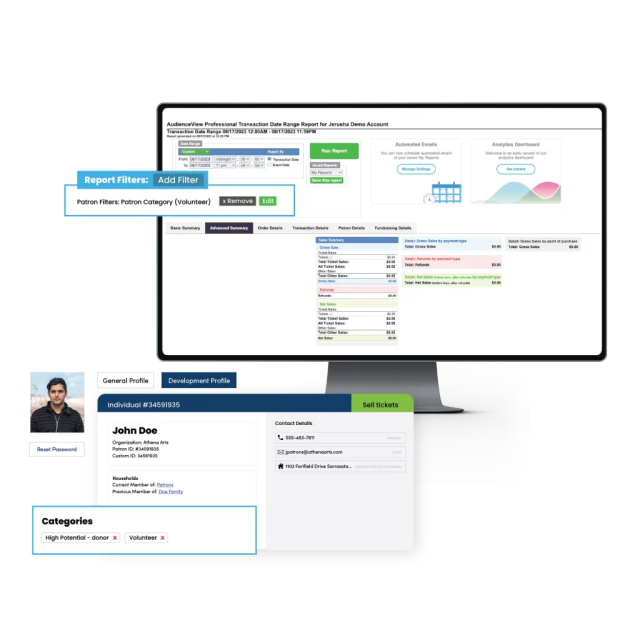
AudienceView creates a centralized patron record connecting ticket and attendance history, subscriptions, packages, donations, memberships, and marketing engagement. Teams can also maintain patron interests, preferences, household and relationship information, tags, and custom fields within the broader customer record.
THE IMPACT: TEAMS CAN BUILT LOYALTY AROUND THEIR OWN BRAND, UNDERSTAND THE FULL PATRON LIFECYCLE, AND CREATE MORE RELEVANT CAMPAIGNS BASED ON CONNECTED PATRON HISTORY.
It feels like Eventbrite was built in a way that makes it exhausting to combine their data with outside data.
Pricing and Cost of Ownership
Per-ticket pricing can be easy to understand for a single event, but harder to forecast across an entire season. Total operating costs may also include external CRM, email, fundraising, middleware, and staff time spent keeping those systems connected.
Eventbrite applies service and payment-processing fees to paid ticket transactions. The exact amount can vary by market, pricing plan, ticket price, and whether the organization or ticket buyer absorbs the fees.
AudienceView provides pricing based on the organization’s ticket mix, volume, and operational requirements. The platform also consolidates functionality that may otherwise require separate ticketing, fundraising, CRM, marketing, and reporting tools.
THE IMPACT: Organizations gain a clearer view of their expected costs across a full season and can evaluate total platform value rather than comparing ticket fees alone.
Eventbrite has started charging hosts for any event above 25 tickets, along with their ticket fees. Now I’m getting customer complaints about high Eventbrite fees, while having to pay them just to post events.
Fundraising Connected to Ticketing
When donations and donor history live in a separate system, development teams may not see the complete relationship, and box office or marketing teams may miss opportunities to recognize and engage supporters.
Eventbrite is primarily a ticketing and event-discovery platform. Native donor management, fundraising campaigns, recurring giving, and connected donor history are not core components of the system.
AudienceView connects fundraising directly to the patron record, with no platform fees for donations. Organizations can invite patrons to donate during checkout, through dedicated campaigns, memberships, recurring gifts, and other fundraising journeys.
THE IMPACT: TEAMS GAIN A MORE COMPLETE UNDERSTANDING OF PATRON VALUE, REDUCE DUPLICATE RECORDS, AND CREATE SMOOTHER JOURNEYS FROM A FIRST-TIME TICKET BUYER TO SUBSCRIBER, MEMBER, OR DONOR.
My main criticism is Eventbrite’s export functionality – while exporting attendee responses seems useful, the formatting of exported data could be improved to make reporting and analysis easier.

Reporting Built for Performing Arts
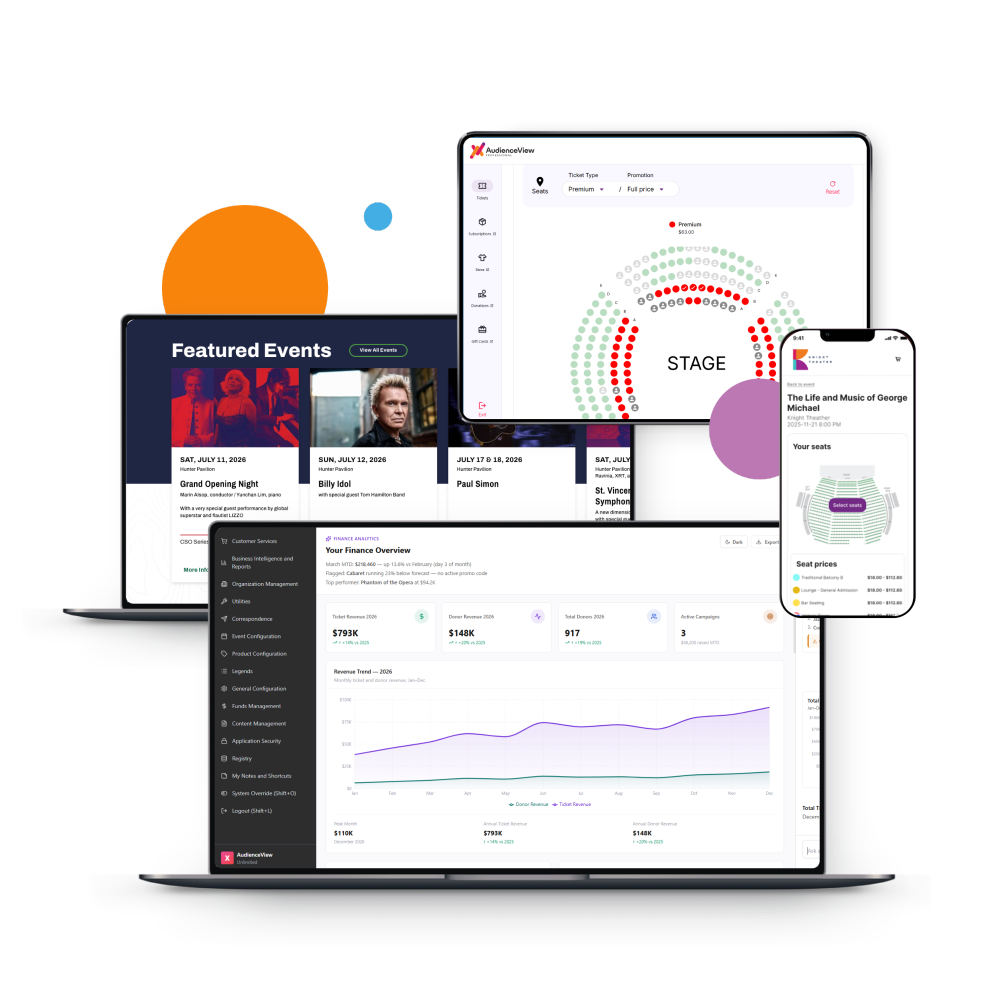
Live event organizations often need answers to questions across performances, seasons, patron groups, subscriptions, and fundraising activity.
Eventbrite provides reporting for event sales, attendees, ticket types, and payouts. Its reporting supports general event, order, attendee, ticket-type, and payout analysis, but lacks depth for detailed patron and performance tracking.
AudienceView provides reporting designed for deeper live event insights, including ticket sales and revenue, attendance, season pacing, purchasing behavior, subscriptions, memberships, and real-time dashboards.
THE IMPACT: STAFF CAN ANSWER OPERATIONAL AND LEADERSHIP QUESTIONS QUICKLY, WHILE REDUCING DEPENDENCE ON SPREADSHEETS AND MANUAL REPORT ASSEMBLY.
Eventbrite’s reporting and analytics features are useful, but don’t provide deeper insights and flexibility for organizations who need detailed performance tracking.
You’re In Good Company
Organizations choose AudienceView to centralize revenue, insights, and audience relationships within one connected platform.








AudienceView can replace Eventbrite as the primary ticketing platform for performing arts and live event organizations that need seasons, subscriptions, reserved seating, memberships, fundraising, patron CRM, and deeper reporting.
AudienceView is designed for non-technical ticketing, marketing, and fundraising teams. Organizations receive guided onboarding, training, and ongoing support so non-technical teams can manage day-to-day workflows without requiring dedicated system administrators.
The organization controls its patron data and can use it across ticketing, marketing, fundraising, reporting, and patron services. AudienceView is designed to help organizations build and manage direct relationships with their audiences.
Eventbrite typically charges transaction and payment-processing fees on paid tickets. AudienceView pricing is based on factors such as ticket volume, ticket mix, and organizational requirements.
The timeline depends on data, seating, configuration, and training requirements. AudienceView provides guided implementation, data migration support, platform configuration, and staff training. Implementations average approximately 18 days to go live when customer-related delays are excluded.
AudienceView customers can access promotional opportunities through TheaterMania and WhatsOnStage, including one-click event-listing sync where supported. Organizations that value Eventbrite’s marketplace should evaluate that discovery benefit separately from the system used to manage their primary ticketing, patron, fundraising, and reporting operations.