AudienceView
vs.
Arts People
Two platforms built for performing arts organizations, designed for different stages of operational complexity, reporting needs, and audience growth.
Find Your Best Fit
Compare AudienceView and Arts People across ticketing, subscriptions, fundraising, reporting, marketing, daily usability, and scalability to determine which platform best fits your organization.
Arts People may be a strong fit if you:
- Operate a smaller arts organization with straightforward ticketing needs
- Prefer a lightweight system focused primarily on box office operations
- Don’t require advanced subscriptions, reporting depth, or marketing automation
AudienceView is often a better fit if you:
- Need ticketing, CRM, fundraising, marketing, and reporting working together
- Manage subscriptions, flex passes, or membership programs
- Want deeper reporting without manual exports or spreadsheets
- Serve multiple programs, rentals, or departments
- Are planning for future growth, not just current operations
| CAPABILITY | Arts People | AudienceView |
|---|---|---|
| Platform Foundation | Ticketing-first arts solution | Built for complex performing arts workflows |
| Primary strength | Smaller or simpler operations | Unified event commerce platform |
| Daily Usability | Simple interface designed for small teams | Structured workflows across teams |
| Reporting | Standard reporting tools | Advanced dashboards and financial insight |
| Patron Data | Patron and donor tracking included | Centralized patron lifecycle view |
| Subscriptions | Subscription functionality for straightforward programs | Flexible subscriptions, passes, memberships, renewals, and automated benefits |
| Fundraising | Simple donation and donor-management capabilities for straightforward fundraising needs | Integrated donations, memberships, donor journeys, and connected patron history |
| Marketing and Segmentation | Some communication tools, with external platforms required for advanced segmentation and automation | Native segmentation, campaign automation, and marketing activity connected to patron data |
| Scalability | Can require workarounds as complexity increases | Designed for multi-program growth |
| Operational Efficiency | May require multiple tools as needs expand | One system across departments |
Capabilities
Ease of Use & Everyday Operations
Arts organizations need systems that remain manageable as programming, staffing, and revenue streams grow more complex.
Arts People is frequently valued for its simplicity and ease of adoption, but organizations with more advanced ticketing, reporting, subscription, or cross-department requirements may need additional tools or processes.
AudienceView provides structured workflows that support box office, development, marketing, and leadership teams from a shared operational foundation, helping reduce reliance on disconnected tools.
THE IMPACT: Teams CAN SPEND LESS TIME RECONCILING DATA ACROSS SYSTEMS AND MORE TIME SERVING PATRONS, SUPPORTING PROGRAMMING, AND IDENTIFYING REVENUE OPPORTUNITIES.
From simple billing practices to tasks like checking their mail to receive checks, Arts People is just maddening. Unfortunately, all the aggravation is not worth the savings.
Reporting & Organizational Visibility
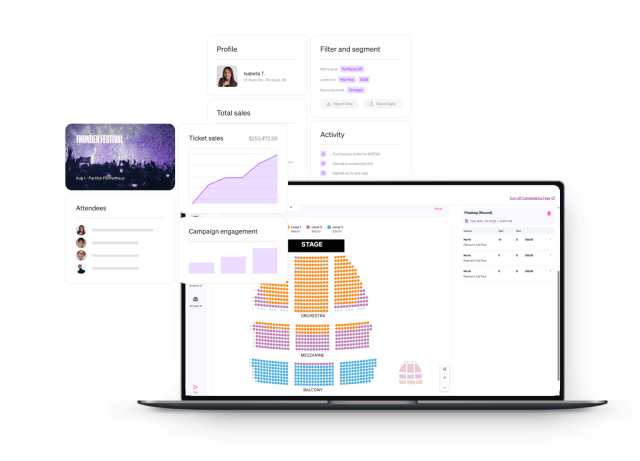
Leadership teams need reporting that goes beyond ticket sales. They need clear visibility into subscriptions, donor behavior, and performance trends across events and seasons.
Arts People provides functional, built-in reports, but some users encounter limitations when trying to extract deeper or highly customized insights.
AudienceView delivers centralized reporting designed for performing arts workflows. This helps teams answer strategic questions faster without exporting data into spreadsheets.
IMPACT: ORGANIZATIONS GAIN CLEARER FINANCIAL VISIBILITY, STRONGER REPORTING FOR LEADERSHIP, AND GREATER CONFIDENCE IN DECISION-MAKING.
Some Arts People capabilities are limited in terms of reporting, enrollment, invoicing (not available), separating categories.
Ticketing, Subscriptions & Donor Experience
Modern arts organizations rely on subscriptions, memberships, and donor engagement, all of which require flexible workflows and connected data.
Arts People is well-built to support fundamental box office tasks, but its ticketing, subscription and donor workflows may require more manual configuration or provide less flexibility as program complexity increases.
AudienceView enables organizations to build complex subscription structures, automate benefits, and manage the full patron journey.
THE IMPACT: ORGANIZATIONS WITH EVOLVING PRICING STRATEGIES OR DONOR PROGRAMS OFTEN SEEK PLATFORMS THAT REDUCE MANUAL CONFIGURATION AND ALLOW BENEFITS TO SCALE ALONGSIDE GROWTH.
Make sure to double-check before you finalize processing a donation or refund, as you can’t edit erroneous transactions.
Support, Onboarding & Growth
The Challenge: Arts organizations vary widely in technical resources, staff size, and implementation timelines.
While Arts People offers features tailored to smaller community theatres, organizations with expanding programs, teams, or reporting requirements may need additional systems or workflows as they grow.
AudienceView combines onboarding, training, and ongoing support designed to help organizations manage current operations while preparing for more complex future needs.
THE IMPACT: A CONNECTED PLATFORM AND GUIDED SUPPORT CAN HELP ORGANIZATIONS ADOPT NEW WORKFLOWS MORE CONFIDENTLY AND SCALE OPERATIONS WITH LESS DISRUPTION.
When we first signed up, Arts People’s customer service was helpful, but it became more automated over time and the customer service declined significantly as transactional fees increased.
Serving Multiple Teams Without Multiple Systems
The Challenge: Box office staff, development teams, marketing, and leadership all rely on the same patron data, but many systems are built primarily for one department.
Arts People supports core ticketing and donor workflows, but expanding marketing or reporting needs may require additional tools.
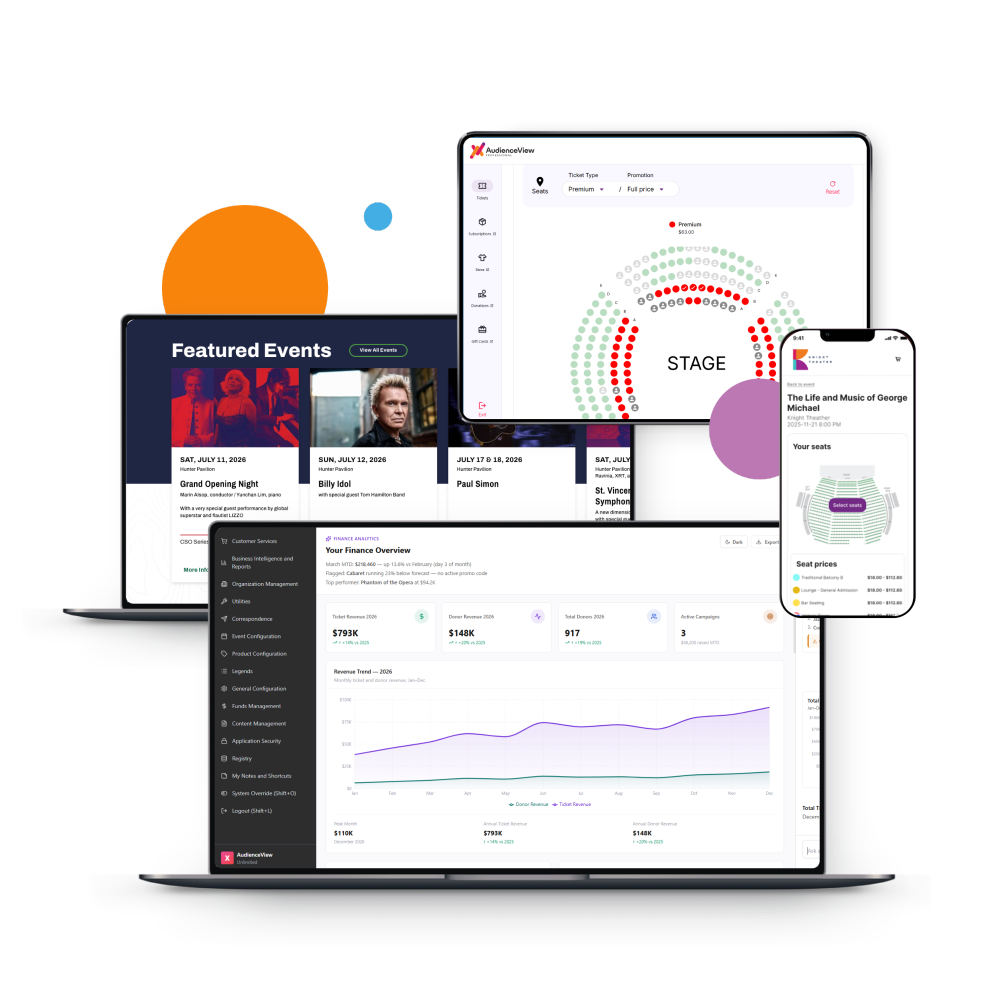
AudienceView is built as a shared operational platform across teams. A single patron record supports marketing segmentation, donor tracking, financial reporting, and box office operations while helping reduce duplicated records, exports, and reconciliation work
THE IMPACT: ORGANIZATIONS GAIN CLEARER VISIBILITY ACROSS DEPARTMENTS AND REDUCE TIME SPENT RECONCILING DISCONNECTED DATA.
The data conversion was seamless; the training was comprehensive and easy to follow; our team integrated AudienceView into our daily operations without interruption!

You’re In Good Company
Organizations choose AudienceView to connect revenue, insights, and audience relationships within one shared platform.


No. AudienceView is designed for growing performing arts organizations that need more than straightforward ticketing without requiring dedicated technical or system-administration resources.
AudienceView is built for everyday use by box office, marketing, development, and leadership teams. Structured workflows help staff complete common tasks without relying on technical expertise, and onboarding and training are included to help teams transition confidently.
Organizations may consider switching when manual workarounds, reporting limitations, subscription complexity, or disconnected systems begin consuming too much staff time.
AudienceView has a proven track record of guiding organizations through data migration. Your team works with implementation specialists to plan the transition, migrate relevant records, configure workflows, and prepare staff before launch.
Yes. AudienceView supports traditional subscriptions, flex packages, memberships, benefits, renewals, and other recurring patron programs. Organizations can create programs that reflect how their audiences prefer to attend, from traditional subscriptions to more flexible packages and membership options.
The right comparison should include more than the initial software price. Organizations should also consider transaction fees, staff time, reporting workarounds, external tools, support requirements, and the cost of replacing a system as their needs grow. Organizations can create programs that reflect how their audiences prefer to attend, from traditional subscriptions to more flexible packages and membership options.