An on-sale announcement opens the door, but what you send next keeps people connected. Effective event email marketing helps organizations build audience relationships before a ticket is purchased, in the lead-up to an event and long after the applause. And audiences want to hear from you: AudienceView research with more than 900 highly engaged theatregoers found that 81% prefer email as their primary communication channel with arts organizations.
Making the most of that preference means giving people useful reasons to keep opening your emails. A relevant recommendation, a timely reminder or a thoughtful follow-up can each serve a different purpose throughout the event lifecycle.
Using ticketing and behavioral data to match the message to the moment, organizations can turn individual communications into a stronger ongoing relationship. Here are five ways to put that into practice.
Help Audiences Discover What Interests Them
Phase 1: Discovery
Promoting every event to every person on your list can quickly make email feel irrelevant. Segmentation allows you to focus communications around audience interests and behavior.
Previous purchases and attendance can help identify the programming someone may be interested in next. For example, a patron who regularly attends comedy, for example, is a natural audience for an upcoming comedy series.
With connected audience and ticketing data, marketers can build more relevant segments based on real purchase and attendance behavior. That helps audiences discover events they’re more likely to enjoy, while giving organizations a better opportunity to turn interest into ticket sales.
Create a More Connected Purchase Experience
Phase 2: Purchase
Once an email has inspired someone to buy, make the next step as simple as possible. Give audiences the information they need to make a decision and a clear path to purchase.
Consistent branding matters here, too. The experience should feel connected as someone moves between your email, website and ticket purchase.
A smooth purchase experience can help convert demand while setting the tone for the relationship ahead. For a first-time buyer in particular, that transaction is also the beginning of a new audience relationship.
Make the Lead-Up to an Event Part of the Experience
Phase 3: Pre-event
After someone buys a ticket, email has a different job to do.
Pre-event communications can answer practical questions about arrival times, parking, accessibility or what to expect at the venue. They can also build anticipation with relevant information about the performance, artist or experience.
Because these communications are connected to a specific purchase, they’re also a natural opportunity for automation. Timely, useful emails can help audiences feel prepared and excited while making it easier for marketing teams to deliver consistent communications at scale.
Keep Audiences Engaged After the Event
Phase 4: Post-event
After an event, email can keep the relationship going. A follow-up might ask for feedback, share related content or recommend another event based on what someone has just attended.
For some patrons, it may also be the right time to introduce a subscription, membership or another way to become more involved with the organization.
Ticketing and attendance data can help determine what might be useful next. This makes post-event email an opportunity to deepen engagement and encourage repeat attendance based on an audience member’s actual experience with your organization.
Give Audiences a Relevant Reason to Return
Phase 5: Re-engagement
Even engaged patrons sometimes stop attending. Email can help you reconnect with them.
To make that outreach relevant, consider what you already know about their relationship with your organization. When did they last attend? What did they see? What kinds of events have interested them in the past?
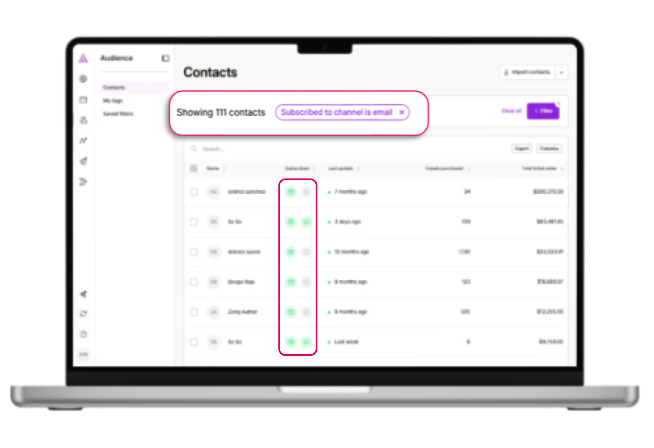
Segmentation and automation can help identify these opportunities and reach audiences when there is a meaningful reason to get back in touch. AudienceView supports segmentation using real purchase and attendance behavior, helping marketers create more relevant communications based on how audiences actually engage.
More relevant outreach can help bring lapsed audiences back while giving them a reason to keep paying attention to your communications.
Use Connected Data to Strengthen the Entire Journey
More relevant email starts with understanding what someone has purchased, attended and shown interest in. AV Digital Marketing connects audience and ticketing data to help teams build targeted segments, automate communications and understand which campaigns contribute to ticket sales. Use that insight to make each message useful and give audiences a reason to return.
See how AV Digital Marketing helps you turn audience insights into more relevant email campaigns.