Why Is Audience Segmentation Important for Live Event Marketing?
Audience segmentation is one of the most effective ways for live event marketers to increase ticket sales. By grouping audiences based on behaviors like past ticket purchases, genre preferences, or presale registrations, marketers can deliver messages that are more relevant and more likely to convert. Without segmentation, most campaigns end up sending the same message to audiences with very different interests and buying intent.
For teams focused on ticket sales marketing, segmentation helps connect fan data, marketing engagement, and ticketing systems so campaigns can respond to real audience behavior instead of static lists.
Your Audience Isn’t One List

It works… but it’s manual, and it slows teams down when every hour and every dollar matters. It also assumes something that simply isn’t true. Your audience isn’t one list.
- Some people attended three shows last year.
- Some clicked on your last email but didn’t buy.
- Some are loyal ticket buyers of a specific genre.
- Some registered for presale access but never converted.
Treating these audiences the same way means the message ends up being relevant to almost no one.
The teams selling out shows faster start with event audience segmentation built on real fan behaviour, using signals like previous ticket purchase, genre or artist affinity, presale registration, email engagement and geographic proximity to a venue. Platforms like Audience Republic bring together ticketing and marketing data to create 360-degree fan profiles with purchase history, marketing engagement, and signals of purchase intent.
As Donnie Bales from the Millwald Theatre puts it:
“It’s just been a huge game-changer. The more people buy tickets, the more those lists update automatically—and that cuts down on so much work.”
How Dynamic Segmentation Works for Ticket Sales
Dynamic segmentation connects ticketing data, marketing engagement, and fan behavior into a single audience profile.
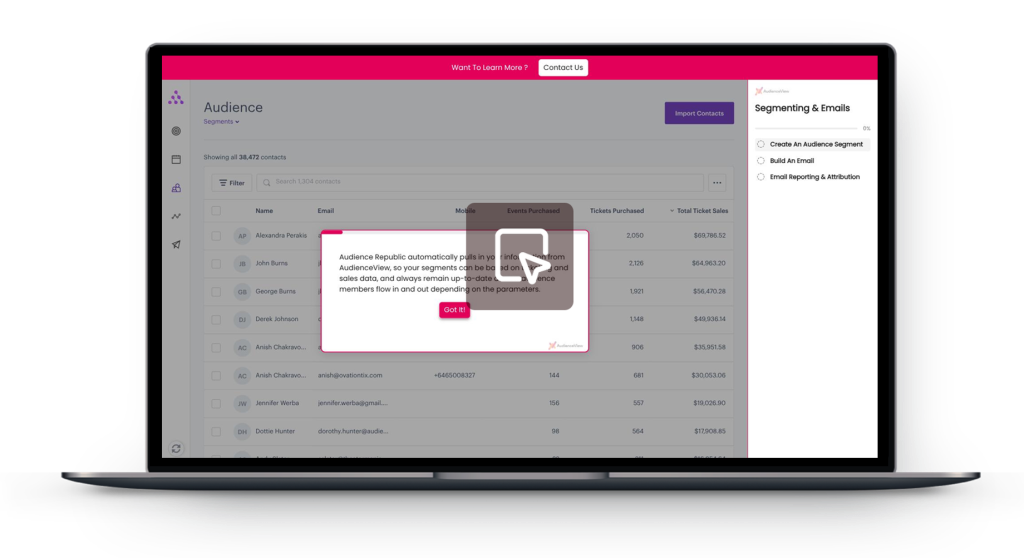
For live event teams, this usually involves:
- Collecting audience data from ticket purchases and marketing platforms
- Identifying patterns such as repeat attendance or genre affinity
- Automatically placing fans into segments based on behavior
- Triggering targeted campaigns based on those segments
Instead of rebuilding lists for every campaign, segments update automatically as fans engage. If someone clicks an email but doesn’t buy, they enter a follow-up segment. If they purchase a ticket, they’re removed from sales messaging and moved into post-purchase communications.
This allows marketing campaigns to respond to what fans are doing right now, rather than relying on static lists.
The Impact on Ticket Sales
The impact can be significant. Organizations using segmentation and targeted marketing strategies have reported 200–300% increases in pre-sale ticket sales by focusing on the fans most likely to buy.
For Ben Koucherik, General Manager of Chicago Children’s Theatre, the integration between marketing and ticketing data has been key:
💡 “It’s got all the functionality I would hope for an email marketing system to have. And the integration with AudienceView is just such a major value add. It’s exciting to see how far we can go.”
When segmentation is powered by real fan behaviour, marketing becomes less about sending more campaigns and more about sending the right message to the right audience at the right time. Because the reality is simple: Your audience isn’t one list and your marketing shouldn’t treat it like one.
Key Takeaways
- Most live event audiences contain multiple behavioral segments
- Sending the same message to every subscriber reduces marketing effectiveness
- Dynamic segmentation updates audience targeting automatically
- Integrating ticketing and marketing data improves audience targeting
- Targeted campaigns can significantly increase presale ticket sales
FAQ
See How Segmentation Could Work for Your Events
Want to see what segmentation could look like for your audience? Fill out this quick form and we’ll show you how your ticketing data can be used to create smarter segments, more targeted campaigns, and better ticket sales results.