The signs that your ticketing platform is holding you back often show up in everyday tasks and audience interactions. A marketing campaign starts with a manual export. A simple question about sales requires multiple reports. A new venue, event type or audience initiative creates another workaround. A customer ready to buy encounters unnecessary steps between discovering an event and completing their purchase.
Over time, those challenges can consume staff time, make it harder to understand and engage audiences, create friction in the purchase experience and limit opportunities to grow revenue.
As operations, audience expectations and opportunities evolve, technology that once met an organization’s needs may no longer support everything it could be doing. Here are seven signs it may be time to take a closer look.
Your Ticketing and Marketing Are Disconnected
Your ticketing system contains valuable information about what audiences buy and attend. But if your marketing team has to export buyer data, manipulate a list and upload it into another platform every time it wants to build a campaign, that information is difficult to put to work.
It also makes it harder to connect marketing activity back to ticket sales and understand which audiences, campaigns and messages are contributing to revenue.
Look for technology that makes ticketing and marketing data easier to activate, so teams can build more relevant audiences and better understand what’s driving sales.
Manual Work Is Slowing You Down
If staff regularly export sales data to spreadsheets, re-enter the same information in multiple places or rely on manual processes to complete routine tasks, the technology may be creating work rather than eliminating it.
That work takes time, introduces opportunities for error and can leave important workflows dependent on the staff members who know how all the pieces fit together.
Look for opportunities to automate repeatable processes, eliminate duplicate data entry and give teams more time to focus on higher-value work.
Your Data Doesn’t Give You Clear Answers
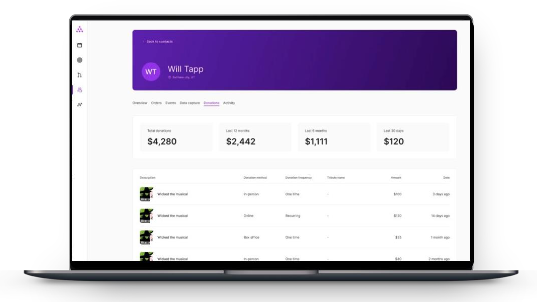
Having access to data isn’t enough if getting useful answers from it is difficult.
Leadership might want to know how a production is selling compared with last season. Marketing may need to understand which audiences are buying or whether a promotion changed purchasing behavior. If answering those questions requires multiple reports and manual analysis, teams can lose valuable time before acting on what they learn.
Look for reporting that gives teams timely visibility into performance across events, audiences, channels and revenue, and makes it easier to turn information into action.
Your Systems Don’t Work Together
Ticketing platform needs to work within a broader technology ecosystem that may include CRM, fundraising, finance, payments and other systems.
If staff regularly move information between platforms or reconcile records manually, maintaining that ecosystem can become a job in itself. It can also make it harder to maintain consistent information across the organization.
Look for a platform with integrations and APIs that allow information to move between the systems your organization relies on without making staff responsible for connecting them.
Your Purchase Experience Creates Friction
Marketing can successfully generate interest in an event only for the purchase experience to get in the way.
A buyer might discover an event on their phone but struggle to find the right performance, understand ticket options or navigate checkout on a small screen. Unclear pricing, unnecessary steps or a disjointed path from event discovery to purchase can all cause potential buyers to drop off.
Look for technology that makes it easy for audiences to discover events, understand their options and complete a purchase across devices.
Growth Creates More Complexity
Adding a venue, launching a festival or introducing a new event type shouldn’t require teams to rebuild the way they work.
If each addition brings new processes, reporting structures or manual reconciliation, growth can increase operational complexity as quickly as it creates opportunity. The same challenge can emerge as organizations add users, sales channels or new ways of generating revenue.
Look for technology that can support multiple venues, events, users and business models without multiplying the work required to manage them.
Your Platform Limits What’s Possible
Technology can become a constraint when new ideas consistently require another tool, custom process or manual workaround.
Your team may want to automate communications based on purchase behavior, introduce a new offer or revenue model, or respond to changing audience expectations. If the first question is always whether the existing technology can support it, acting on new opportunities can become slower and more difficult.
Look for a platform that can evolve with changing audience expectations, business models and technology, giving teams more flexibility to act on new ideas.
What to Look for in a Modern Ticketing Platform
If several of these signs sound familiar, evaluating your ticketing platform isn’t simply about finding a platform with more features. It’s about finding technology that better supports how your organization operates today and where it wants to go next.
Ask whether your platform can:
- Connect ticketing, audience and marketing data
- Reduce manual work and duplicate data entry
- Provide timely, actionable reporting and audience insights
- Integrate with the technology your organization relies on
- Support a smooth journey from event discovery through purchase
- Scale across venues, events, users and business models
- Adapt as audience expectations and your organization evolve
It’s understandable to hesitate before changing a core platform. But the work involved in making a change should also be weighed against the work created every day by manual processes, disconnected systems and technology limitations. The right platform should reduce that burden over time and give teams more capacity to pursue the opportunities ahead.
Learn how AudienceView can help you bring ticketing, payments, digital marketing, audience intelligence and event operations together in a unified platform.