Why Personalized Marketing Matters for Arts Organizations
For arts organizations, audience growth can continue well beyond the first ticket sale. It includes building relationships that encourage patrons to return, explore new programming, become members, support fundraising initiatives and remain connected to the organization over time.
More relevant, personalized communication can play an important role in building those relationships.
Every patron brings a different history and set of interests. Someone attending a family performance for the first time has a different relationship with your organization than a long-time member. A patron who regularly attends concerts may respond to different programming than someone who primarily purchases theatre tickets.
Personalized marketing allows arts organizations to recognize those differences and use what they know about their audiences to make communications more relevant and effective.
The challenge is delivering that level of personalization, especially with a small team.
That was the challenge facing deCoste Performing Arts Centre in Pictou, Nova Scotia. As its programming expanded and audiences became more diverse, the organization wanted to build stronger patron relationships through more relevant communications. But with a lean team and disconnected systems, delivering that level of personalization efficiently was difficult.
By connecting ticketing, customer data and marketing, deCoste created a more efficient foundation for audience engagement. Its experience shows how small arts teams can use the audience information they already have to build meaningful segments, personalize communications, reduce administrative work and better understand marketing’s contribution to revenue.
Why Personalization Can Be Challenging for Small Arts Teams
Personalized marketing depends on knowing enough about your audience to communicate with different patrons in different ways.
For small teams, putting that idea into practice can quickly become resource-intensive. Marketing staff may already be responsible for event promotion, email campaigns, social media, website updates, membership communications, fundraising support and a long list of other priorities.
At deCoste, Jennifer MacLennan’s role spans outreach, fundraising and marketing. Before implementing AV Digital Marketing, patron and ticketing information lived in AudienceView while marketing campaigns were managed separately. Before sending campaigns, staff had to create audience lists, export information and upload contacts into their marketing platform.
As Jennifer explains:
“With Mailchimp previously, you literally had to create your list and upload it, and a lot of times we would run into issues between the two. They weren’t syncing as well as they should.”
The problem extended beyond campaign preparation. Understanding results could also require the team to piece together information from different platforms.
For resource-constrained teams, the barrier to personalized marketing isn’t necessarily a lack of audience data or ideas. It’s often the time required to turn that information into useful, targeted communications.
How Connected Data Makes Personalized Marketing More Efficient
When ticketing, customer information and marketing operate as separate systems, staff are responsible for moving information between them. Connecting those systems makes it easier to put existing audience data to work.
By connecting AV Digital Marketing with AudienceView, deCoste brought ticketing, customer data and marketing together within one workflow.
The team can now create audiences using live patron information, including purchase history, attendance, engagement and customer attributes. Instead of repeatedly exporting and uploading static lists, marketers can use information already available through their ticketing and customer records.
That creates a stronger foundation for personalization.
Previous purchases can indicate programming interests, while attendance history can help identify new and returning patrons. Other customer information can provide additional context about a patron’s relationship with the organization.
For a small team, connected ticketing data reduces manual work while making the audience information the organization already has easier to use.
How Audience Segmentation Supports More Relevant Communications
Once audience data is connected, segmentation helps turn that information into meaningful groups of patrons.
Rather than treating an entire database as a single mailing list, arts organizations can build segments around audience behaviour, interests, purchase history or other relevant attributes.
A patron who has attended similar programming in the past may be a strong audience for an upcoming event. Members can receive communications specific to their relationship with the organization. Recent ticket buyers may need different information than patrons who haven’t attended in some time.
At deCoste, audience segments can now be created using live patron data rather than manually prepared lists. Because that information is connected to its marketing platform, the team can use actual audience behaviour to determine who should receive a campaign.
Dynamic segmentation also helps address a practical challenge for small teams: keeping audiences up to date.
When audience information stays synchronized, teams can spend less time maintaining lists and more time deciding how to communicate with them.
How Marketing Automation Helps Small Teams Scale Personalization
Connected data and segmentation help teams understand who they want to reach. Marketing automation makes it easier to put that audience intelligence into action without adding more manual work.
At deCoste, campaign creation has become more efficient because event information, including dates, images and ticket links, can be pulled directly from AudienceView into AV Digital Marketing’s email builder. Audience synchronization and dynamic segments also reduce the need to manually prepare information before each campaign.
As Jennifer puts it:
“It saves so much time because everything is already there.”
Automated customer journeys can take this approach further by helping organizations communicate with patrons at relevant points in their relationship without requiring staff to manually initiate every interaction.
For example, a welcome journey can introduce a new patron to the organization after their first engagement, while birthday communications can provide another personalized touchpoint.
Email and SMS can also support different moments throughout the patron journey. When those channels use the same connected audience information, teams can target communications based on patron interests, behaviour and engagement without creating another disconnected workflow.
How Connected Marketing Makes Revenue Easier to Measure
Connected audience data can also help organizations better understand whether marketing activity is contributing to business results.
Traditional email metrics such as open rates and click-through rates provide useful information about engagement. They don’t necessarily tell an organization whether a campaign resulted in ticket sales.
Before connecting its systems, deCoste had to cross-reference marketing activity with ticket sales to understand the relationship between the two. Now, the team can see revenue associated with individual campaigns.
The impact quickly became apparent. One holiday campaign generated nearly $11,000 in attributable ticket revenue, while other campaigns have generated between $1,000 and $3,000 in ticket sales.
“The part that sold our Executive Director was seeing the revenue from that particular email. We didn’t have to cross-reference Mailchimp with ticket sales anymore.”
For small arts organizations, this visibility can help teams understand what’s working and make more informed decisions about where to invest limited resources.
How Personalization Can Support Relationships Beyond a Single Ticket Sale
The value of audience intelligence extends beyond the revenue generated by an individual campaign. The longer-term opportunity is using what an organization knows about its patrons to build relationships across multiple interactions.
A first-time ticket buyer may return for another performance and eventually develop a deeper relationship with the organization. For some patrons, that relationship can grow to include membership or other forms of support.
Personalized communications can help organizations recognize and support those different relationships.
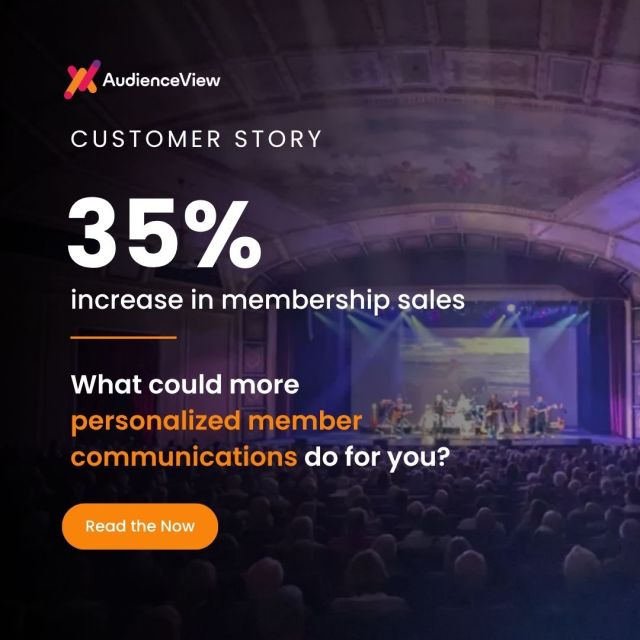
At deCoste, targeted marketing has already played a role in broader audience initiatives. Following the launch of a new tiered membership program, targeted marketing helped support a 35% increase in membership sales. The organization also now has a more connected view of customer profiles, ticket purchases and engagement history, providing a stronger foundation for understanding how patrons interact with deCoste over time.
Individual campaigns matter, but their value can extend beyond a single sale when they contribute to an ongoing patron relationship.
Five Questions Small Arts Teams Should Ask About Personalized Marketing
Small arts organizations don’t need large marketing departments to improve personalization. These questions can help identify where existing processes may be creating unnecessary work and where audience data or automation could make engagement more manageable.
1. Are disconnected systems creating unnecessary manual work?
If your team regularly exports audience information from one system, cleans or reorganizes it and uploads it into another, consider how much staff time is being spent maintaining the process rather than developing the campaign itself.
2. Can we use live ticketing and customer data to build audience segments?
Purchase history, attendance and other patron information can help teams identify relevant audiences without relying on one broad mailing list. The easier that information is to access, the easier it becomes to use segmentation consistently.
3. Are there opportunities to automate routine patron communications?
Consider which communications happen repeatedly or at predictable points in the patron journey. Automated customer journeys can help teams maintain relevant, timely engagement without requiring staff to initiate every message.
4. Are we using audience intelligence to make communications more relevant?
Consider whether patron interests, purchase history, attendance and engagement are informing who receives your communications and what you send them.
5. Can we connect marketing activity to meaningful business results?
Open rates and clicks are useful, but arts organizations should also consider whether they can understand how campaigns contribute to ticket sales, membership and other organizational priorities.
Making Personalized Marketing More Manageable for Small Teams
Small arts organizations face a difficult balance. They want to communicate with patrons in ways that feel relevant and personal, but their teams have significant demands on their time.
Personalization doesn’t need to depend on more manual work. Connecting ticketing, customer data and marketing gives teams a foundation for understanding audiences, building meaningful segments and creating more relevant communications. Automation can reduce the administrative work required to maintain those efforts, while connected reporting can provide a clearer view of what marketing contributes to the organization.
For deCoste Performing Arts Centre, that shift has meant less time managing disconnected processes and more ability to focus on audience engagement. It has also made marketing’s impact easier to see, from nearly $11,000 in revenue attributed to a single holiday campaign to targeted marketing supporting broader membership growth.
For many organizations, the opportunity isn’t collecting more audience data. It’s making better use of the information they already have.
Ready to put your audience data to work?
AudienceView helps performing arts organizations connect ticketing, customer data and marketing so teams can build audience segments, personalize communications, automate marketing activity and better understand campaign performance.
Book a demo to see how AudienceView can help your organization turn audience intelligence into stronger patron engagement without adding more manual work.