Live event organizations aren’t short on audience data. Every ticket purchase, event attended, campaign interaction and repeat visit can tell you something about what an audience wants and how they engage.
The challenge is what happens to that information next.
When ticketing and marketing operate separately, valuable audience signals can stay trapped in one system while marketers work from another. Connecting those systems creates an opportunity to turn what you already know about your audiences into more relevant marketing and measurable action.
That’s part of the thinking behind AV Digital Marketing, the evolution of Audience Republic for AudienceView and Saffire clients. The transition reflects a closer connection between digital marketing and the broader AudienceView experience, including the audience and ticketing data clients already use.
But the value isn’t simply having more information available in another platform. It’s what marketers can do when that information moves more easily from audience behavior to marketing action and, ultimately, measurable outcomes.
Start With the Audience Data You Already Have
For most live event organizations, valuable marketing data starts accumulating long before a campaign is created.
Ticketing activity can reveal signals such as what someone purchased, which events they attend, how frequently they attend and when they last engaged with your organization.
Marketing activity adds another layer, including which communications capture their attention and which campaigns ultimately lead them toward a purchase.
The opportunity is connecting those signals so one can inform the other.
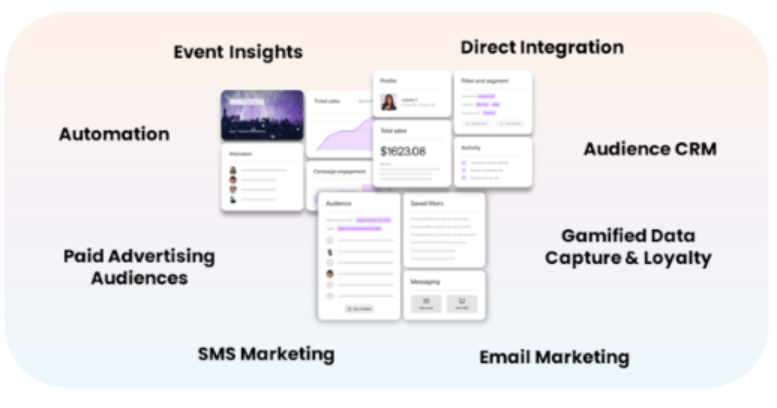
With AV Digital Marketing, audience, event and purchase data from AudienceView automatically syncs into the marketing platform, giving teams access to information such as purchase history, event activity and audience details when building campaigns. That means marketers can put existing audience data to work without exporting lists or manually moving information between systems.
This means that you can connect marketing activity to ticket sales and revenue through attribution reporting, helping teams understand which campaigns, messages and audiences contribute to conversions. It also allows you to segment audiences around event engagement using synced event and order data, helping teams promote similar experiences, nurture loyal attendees, or reconnect inactive customers. Dynamic audience segments can also automatically update as customer and ticketing data changes, ensuring that marketers are always working with accurate audience lists without the need for ongoing list maintenance.
This creates a richer audience profile that combines ticketing activity with marketing engagement, giving teams more context for every campaign and greater confidence that they are reaching the right audience at the right time.
When Ticketing and Marketing Data Work Together
Consider a marketer preparing a campaign for an upcoming event.
When ticketing and marketing data live separately, they may start with a broad contact list and build targeting based primarily on information available within their marketing platform.
Ticketing data adds another layer of context. Someone purchased tickets to three similar events last season. Another customer just made their first purchase. Someone else attended regularly in the past but hasn’t purchased recently.
Those aren’t simply customer records. They’re signals that can influence what happens next.
With AV Digital Marketing, customer, event and order data from AudienceView automatically syncs on an ongoing basis. Teams can use that information to build dynamic audience segments based on actual customer behavior, such as attending a specific event type, purchasing recently or returning as a loyal customer.
As customer and ticketing activity changes, those audiences update automatically, helping marketers work from more current information rather than relying on static imported lists.
Turn Connected Data Into Actionable Audiences
Once ticketing data is available within the marketing environment, segmentation becomes much more powerful.
Instead of thinking only in terms of demographic groups or broad mailing lists, organizations can build audiences around behaviors that matter to the next interaction.
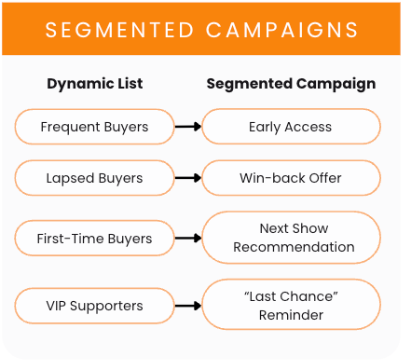
The goal isn’t to create a different campaign for every individual. It’s to recognize when audience behavior gives you a meaningful reason to do something differently.
And when ticketing and marketing data work together, those decisions can be based on what audiences actually do, not just what marketers assume they might want.
Let Audience Behavior Shape What Happens Next
AV Digital Marketing is designed to help teams put connected audience data into action across the customer journey. And that opportunity doesn’t end with a single campaign.
Imagine someone receives an email promoting an upcoming event, engages with the campaign and ultimately purchases a ticket. That purchase becomes a new audience signal.
Rather than ending the journey at conversion, it can help inform what comes next: pre-event communications, post-event follow-up, recommendations for another experience or, eventually, re-engagement.
Within AV Digital Marketing, attribution reporting connects marketing engagement and campaign performance to ticket purchases and revenue outcomes. This gives teams a clearer view of which audiences, messages and campaigns contributed to sales, while helping them use those insights to inform future audience strategies and campaign decisions.
Automate the Moments That Matter
Once teams know which audience behaviors matter, automation can help turn those insights into repeatable journeys.
That might include welcoming a first-time buyer, following up after attendance, re-engaging someone whose purchasing activity has declined or recommending an experience based on previous behavior.
The result isn’t automation for automation’s sake. It’s the ability to respond more consistently to audience behavior at the right moments.
With AV Digital Marketing, those connected signals can become the starting point for automated journeys. Here are a few ways that can look in practice:
- Pre Sale & Early Access:
When someone joins a pre-sale registration list, they can receive confirmation emails, reminders leading up to the on-sale date and timely SMS notifications when tickets become available. Once they purchase, they’re automatically removed from the journey, helping teams keep audiences engaged without manually managing lists.
- Lapsed Audience Re-Engagement:
Customers who haven’t purchased within a defined period can automatically enter a re-engagement journey featuring tailored offers, relevant upcoming events or personalized recommendations. Once they return and purchase, they’re removed from the workflow, helping teams reconnect with valuable audiences without relying on manual reporting or campaign setup.
What Connected Audience Data Looks Like in Practice
The impact becomes clearer when connected data is put to work in a real audience strategy. For deCoste Performing Arts Centre, ticketing and marketing previously lived in separate systems, requiring the team to manually export audience lists, upload contacts and piece together reporting.
By connecting AudienceView with AV Digital Marketing, deCoste could use patron data, including purchase history, attendance and engagement, to build more targeted audience segments and create more relevant campaigns.
The impact was measurable. One holiday email campaign generated nearly $11,000 in ticket revenue, while targeted marketing also helped support a 35% increase in membership sales following the launch of a new tiered membership program.
Close the Loop With Marketing Attribution
Taking action on audience data is only part of the equation. Teams also need to understand what those actions drive.
Opens and clicks provide useful engagement signals, but marketers ultimately want to know whether that activity contributed to outcomes such as ticket purchases and revenue.
Campaign attribution can help connect those dots. Instead of only asking “Did they engage?”, teams can begin asking:
- Which campaigns contributed to purchases?
- Which audiences converted?
- What generated revenue?
- What should we do differently next time?
Those answers don’t just measure campaign performance. They become new audience intelligence that can inform what happens next.
Ticketing behavior provides a signal. That signal helps define an audience. Marketing turns that insight into action. The outcome creates new information that can shape future segmentation, campaigns and investment.
Over time, this creates a continuous cycle where each interaction can make the next decision more informed. Ticketing and marketing are no longer telling two separate stories. Together, they create a clearer picture of audience behavior and what drives action.
Put Connected Audience Data to Work With AV Digital Marketing
For AudienceView clients, AV Digital Marketing brings digital marketing capabilities closer to the audience and ticketing data already within the AudienceView ecosystem.
With capabilities across segmentation, email, SMS, automation and campaign attribution, teams can turn audience information into marketing action and better understand what those actions drive.
What makes AV Digital Marketing different is the connection between marketing and ticketing data. Rather than relying on separate systems, manual exports or static audience lists, AudienceView clients can work with synchronized customer, event and purchase data within the same ecosystem. This gives marketing teams a more direct way to turn existing audience data into targeted campaigns, automated journeys and measurable results.
That connected experience helps teams:
- Build more accurate audience segments using ticketing behavior and customer data.
- Deliver targeted email and SMS campaigns using real-time audience insights.
- Automate customer journeys based on event activity and purchasing behavior.
- Understand which campaigns contribute to ticket sales and revenue through built-in attribution reporting.
The result is a more connected approach to audience growth, helping organizations move from audience data to marketing action and measurable business outcomes.
Learn how AV Digital Marketing helps you turn audience data into more relevant campaigns, automated journeys and measurable outcomes.