
Marketing leaders at live event venues are being asked more direct questions than ever:
These are fair questions. Ticket revenue is the lifeblood of most venues, and marketing plays a significant role in generating it. The challenge is that many teams are still working with tools that were never designed to connect marketing activity to ticket transactions.
As a result, even experienced marketers often can’t clearly answer a simple question: How much revenue did that email or SMS campaign generate?
The Attribution Gap Isn’t a Strategy Problem, It’s a Systems Problem
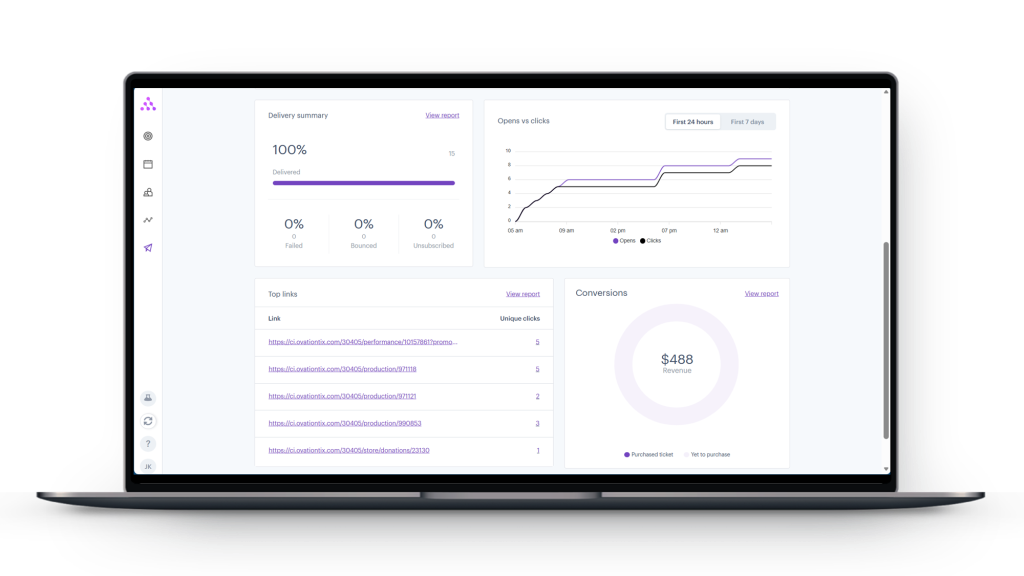
Attribution In Action:
A live campaign tied directly to real ticket revenue, showing what truly drives conversions.
Most venues use email platforms like Mailchimp or Constant Contact to send campaigns. These platforms are effective at measuring engagement. They tell you who opened, who clicked, and which subject lines performed best. They are optimized to share reporting metrics on their own platform, but what they don’t show is ticket revenue from the complete customer flow.
When someone clicks through and purchases tickets, that transaction lives in your ticketing system. The email platform never sees it. At the same time, your ticketing system records the order but doesn’t know which campaign influenced the sale. Marketing and ticketing are both working but they are not connected.
This disconnect makes attribution difficult, even for teams that care deeply about measuring impact.
What Gets Lost Without Revenue Attribution
When marketing performance is measured primarily through engagement, teams naturally optimize for what they can see. Open rates improve, click rates improve and creative gets sharper. But without transaction data tied back to campaigns, it’s difficult to know whether those improvements translate into ticket sales.
Over time, decisions start to rely more on habit than evidence. Send times become tradition. Channel allocation becomes historical precedent. Certain assumptions go unchallenged simply because there’s no data to challenge them.
In live events, that uncertainty carries more weight than in many other industries. Each event has a fixed date and fixed capacity. If a campaign underperforms, there isn’t always another quarter to make up the difference which results in lost revenue and limited growth.
Why Attribution Matters More for Live Events
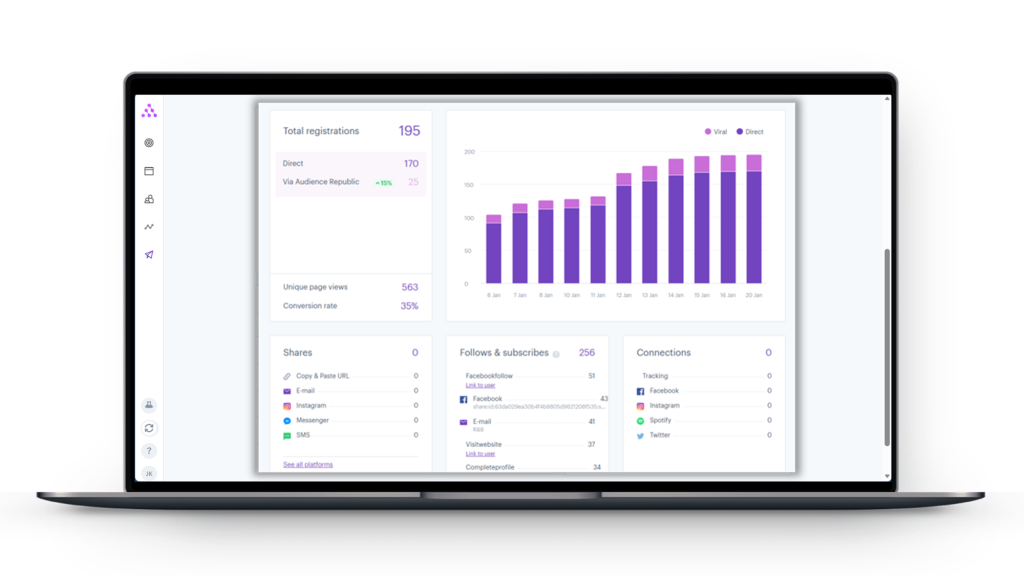
Attribution In Action:
A live campaign tied directly to real customer actions, showing real audience growth.
E-commerce organizations can iterate over long buying cycles. They can restock inventory, retarget for months, and optimize toward lifetime value. Venues operate differently.
You have a defined sales window and, a set number of seats. Once the event passes, unsold inventory cannot be recovered. That reality makes real-time clarity essential. Marketing teams need to know which campaigns are driving ticket sales while tickets are still available, not weeks after the event concludes.
Attribution isn’t about post-event reporting. It’s about enabling smarter decisions during the sales window.
What Changes When Marketing and Ticketing Are Connected
When Audience Republic is integrated directly with AudienceView, marketing campaigns are tied to live ticketing data. This connection allows venues to see revenue generated per email, per SMS, per workflow, and per audience segment.
Donnie from the Millwald Theater (read their success story here) shared how eye-opening this visibility can be once systems are connected:
💡 “I love seeing the top spending ticket buyers,” he said. “That was data I had never pulled before.” – The Millwald
That visibility unlocks three critical capabilities:
Instead of asking whether a campaign “performed well,” teams can evaluate it based on ticket sales generated. That shift changes how marketing is perceived internally. It moves the conversation from activity metrics to commercial impact.
Another client highlighted (read their success story here) how access to deeper patron data changes how teams think about engagement:
💡 “The fact that this integrates directly with AudienceView, and I can see so much data about our patrons, is exciting to me.” – Ben, Children’s Theater Chicago
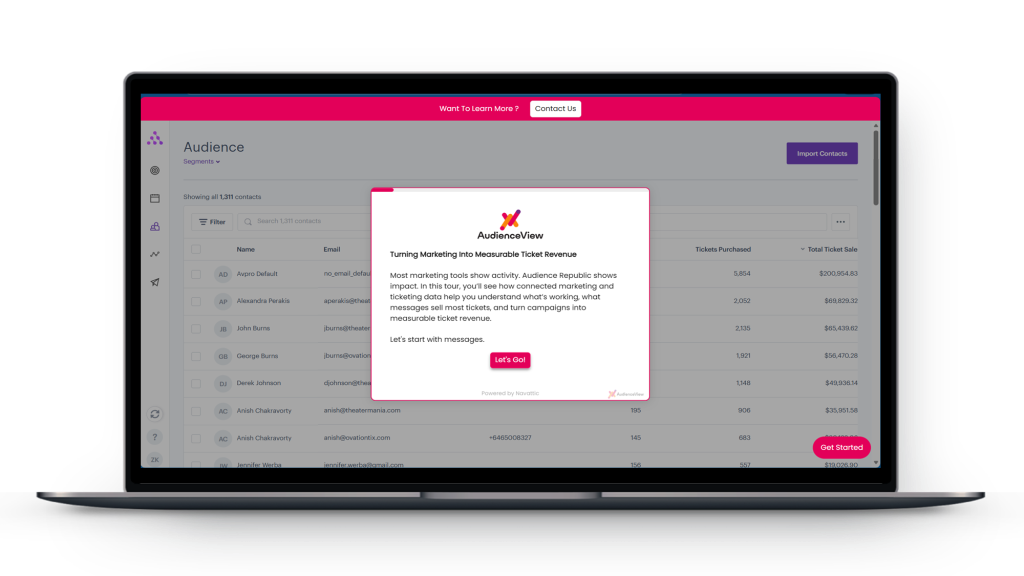
A More Sustainable Way to Operate
Most venues are already investing in email and SMS marketing. The opportunity is not necessarily to do more but to operate with clearer visibility. When marketing and ticketing systems are connected, decisions become more informed. Testing becomes more meaningful. Optimization becomes more timely. Teams can adjust messaging, segment focus, or channel mix based on revenue data rather than intuition alone.
Beyond reporting, connected systems also improve the audience experience itself. Personalized outreach and automated workflows make communication feel more direct and thoughtful. As Donnie shared:
💡 “It has saved us a ton of money, and it elevates the patron experience.” – The Millwald
For marketing leaders who want to strengthen their credibility, improve campaign performance, and use their budget more effectively, attribution is not a trend. It’s a practical step toward operating with greater clarity. Disconnected systems create blind spots but connected systems reduce them. And in an environment where every seat matters, that clarity can make a measurable difference.
Start Connecting Your Marketing to Ticket Revenue
If your team is struggling to understand which campaigns actually drive ticket sales, it may be time to close the gap between marketing and ticketing. Chat with our team to see how Audience Republic helps you measure real impact, remove guesswork, and make more confident decisions about where to invest your marketing efforts.