Live event marketing moves quickly but a lot of teams are still running campaigns the slow way. We still see marketers exporting lists, rebuilding segments for every show, and pulling reports to figure out what happened after the fact. It works. But it’s manual. And when budgets are tighter and teams are leaner, manual work adds up fast.
Automation isn’t about sending more emails. It’s about removing repetitive setup, responding to real audience behaviour, and making marketing measurable. When ticketing and marketing are connected, campaigns don’t just go out they adapt. And when leadership asks what’s driving revenue, you have a clear answer.
If you’re not running these automations yet, there’s a good chance your team is spending more time than necessary and missing opportunities along the way. Below are 5 automations that should already be working in the background of every live event marketing team.
1. Pre-Sale & Early Access Automation
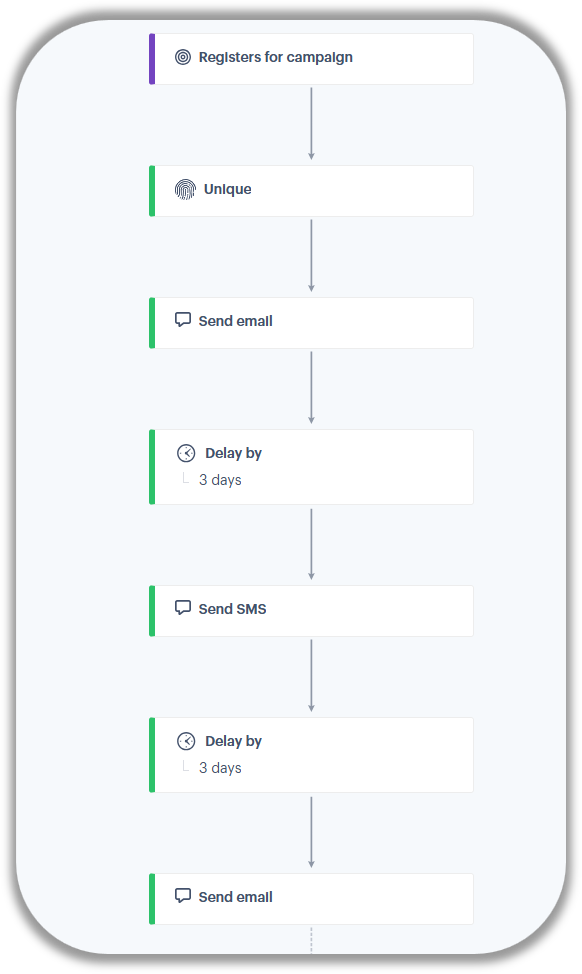
When marketing live events it shouldn’t start at on-sale. When someone joins a waitlist or signs up for early access, that’s intent. That moment matters. And it shouldn’t depend on someone remembering to schedule a follow-up.
A simple automation might look like this:
Instead of relying on one big launch email, you build momentum steadily. Interest stays warm. The experience feels intentional.
2. Cart Abandonment
Your campaign has done its work, it’s generated interest and you get customers in looking at your upcoming events and available tickets. However not every interested customer completes a purchase.
Automation allows you to respond to that intent automatically:
- When someone enters a Cart Abandon dynamic list, the workflow begins.
- If no purchase is completed within a few hours, a reminder email is sent.
- A follow-up SMS can go out the next day.
- The moment a purchase is completed, they exit the workflow.
Automation that follows up on cart abandon or high-intent engagement quietly recovers revenue that would otherwise be lost. It runs in the background, requires minimal management, and often delivers outsized returns.
3. Post-Purchase Engagement
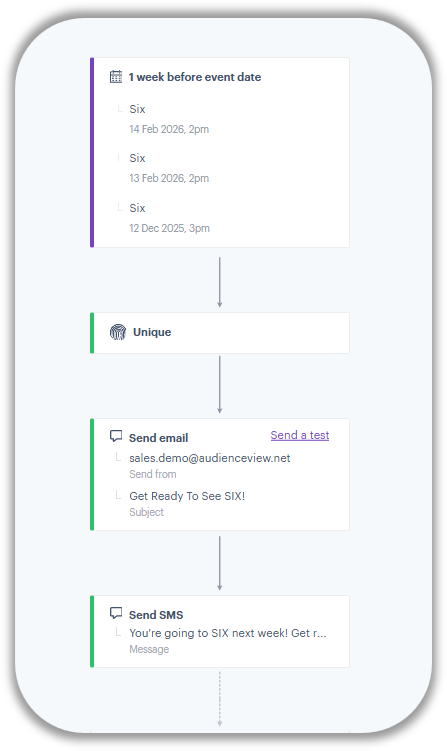
You need to continue the conversation with your customers after they buy tickets. Automated post-purchase journeys can recommend upcoming shows, promote add-ons, or reinforce loyalty. This is where single-ticket buyers start becoming repeat attendees.
For example:
- A ticket purchase triggers a confirmation follow-up.
- Two days later, the buyer receives recommendations for related events.
- After the show, they receive a thank-you message.
- They’re automatically added to a “Repeat Buyer” list for future targeting.
This is how single-ticket buyers become loyal attendees. Without automation, that follow-up either doesn’t happen or happens inconsistently.
4. Re-Engagement of a Lapsed Audience
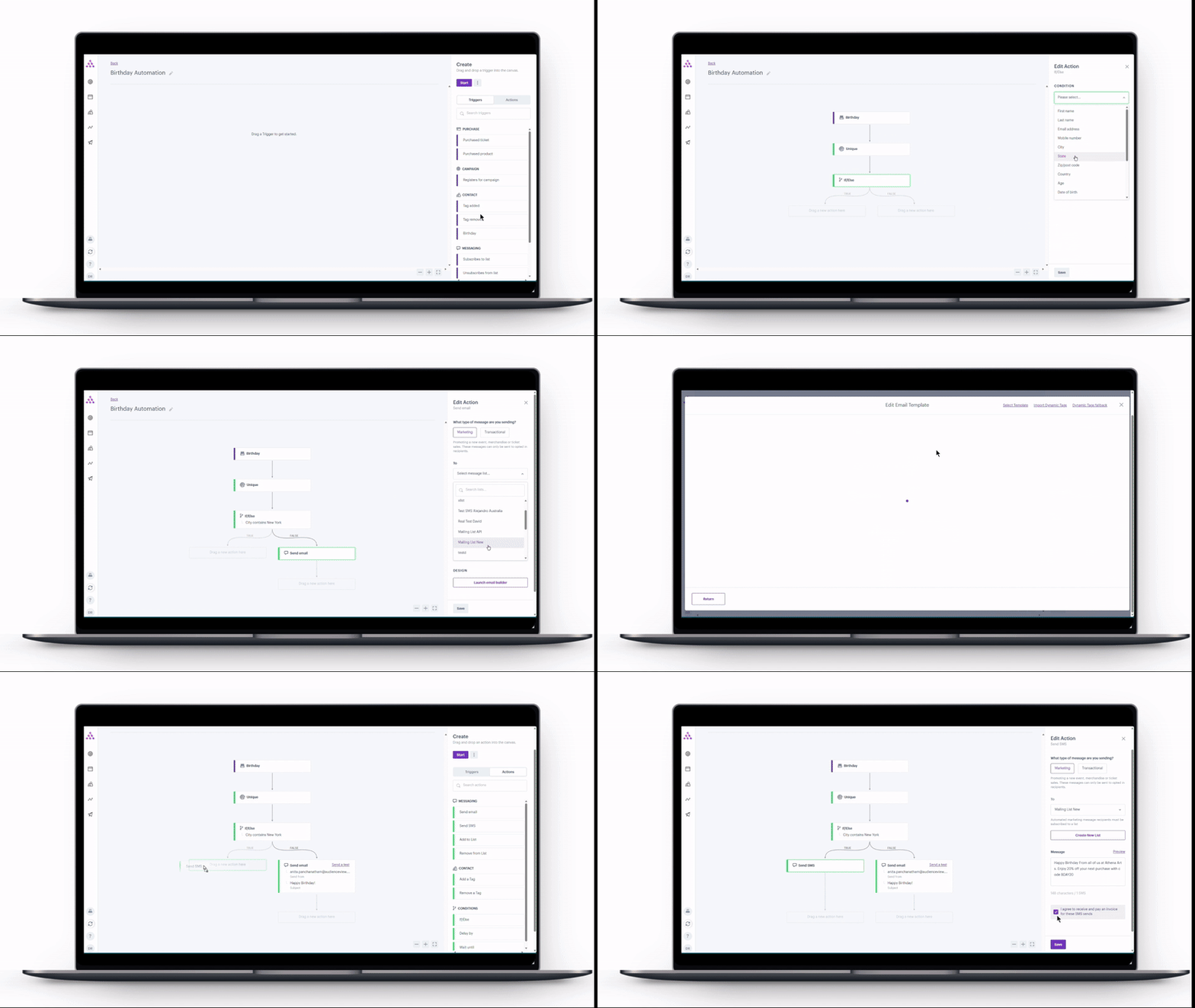
With buys lives and so much going on its common for attendees to simply disengage over time and they just stop buying. Automation can identify customers who haven’t engaged in a set period and reintroduce them to relevant events. Making something that can be difficult pretty manageable, for example:
- Contacts who haven’t purchased in 12 months are added to a “Lapsed Audience” list.
- They receive a tailored re-engagement email like a birthday email or a promo code promotion.
- They can enter a short nurture sequence featuring relevant upcoming shows.
- If they purchase again, they’re automatically removed from the workflow.
Re-engaging existing audiences is often more cost-effective than acquiring new ones but only if you’re actively monitoring and nurturing them. Manual reporting rarely catches this at the right time.
5. Event Genre Automation
Not every audience member is interested in every show. But many teams still send broad campaigns because segmentation takes time. Automation can simplify that, for example:
Instead of rebuilding segments for every genre campaign, targeting stays aligned to actual purchase behaviour.
Why Don’t You Try It Out?
In Conclusion
Automation in live event marketing isn’t about complexity. It’s about consistency. When workflows are built around real audience behaviour, marketing becomes less reactive and more intentional. Instead of exporting reports and rebuilding segments for every campaign, teams can create systems that respond automatically to interest, purchase patterns, and engagement.
The result isn’t just saved time. It’s clearer targeting equaling more relevant communication and better visibility into performance. In an environment where teams are expected to do more with less, automation provides structure. It allows marketing efforts to scale without increasing manual workload, and it makes it easier to connect activity to outcomes.
The question isn’t whether automation is possible. It’s whether your current processes are working as efficiently as they could be. If even one of these workflows is still being handled manually, that’s likely an opportunity to improve both performance and efficiency.
See How Automation Could Work for Your Events
Chat with our team to explore how your organization could improve its marketing automation. Book a quick consultation to see Audience Republic in action and what these workflows could look like for your team.