How to build an audience growth strategy that attracts new attendees and strengthens loyalty.
A loyal audience is one of the strongest assets a live event organization can have. Returning patrons bring familiarity, advocacy, and a dependable foundation for audience growth. But loyalty alone cannot carry an organization forward indefinitely. Audience habits change, communities evolve, and new generations of attendees form different expectations about how they discover, evaluate, and experience live events.
Sustainable audience growth requires both acquisition and retention. The goal is not to shift attention away from existing patrons. It is to make the audience relationship broad enough to welcome new people, then strong enough to give them a reason to return.
Connect Audience Acquisition and Retention for Sustainable Growth
Audience acquisition is often measured by the first conversion: a new email subscriber, ticket buyer, member, or donor. Retention is measured later through repeat attendance and ongoing engagement. In practice, those outcomes are connected from the beginning.
The campaign that introduces someone to an event, the information that helps them decide, and the experience they have after purchase all shape whether that person becomes a repeat attendee. A promotion may win the first sale, but relevance, trust, and ease determine whether the relationship continues.
This is why organizations should evaluate new-audience campaigns beyond immediate ticket revenue. Look at how many first-time buyers return, join the email list, attend another event category, become members, or deepen their involvement over time. Those signals show whether acquisition is creating lasting value rather than a temporary spike.
Use Audience Intelligence to Drive Audience Growth
Audience growth begins with understanding both who is already engaged and who is not yet represented. Audience age profiles can reveal whether attendance is concentrated within one generation. Attendance behavior can show which event types attract first-time buyers and which primarily serve established patrons. Discovery channels and communication preferences can help explain how different groups find information and what moves them to act.
Avoid treating demographic data as a complete picture. Two people of the same age may have very different motivations, budgets, interests, and levels of familiarity with your organization. Combine demographic context with behavioral signals such as browsing activity, purchase history, email engagement, donations, and event preferences. This creates more useful segments and helps teams identify where interest exists, even before someone buys.
AV Digital Marketing can support this approach by bringing ticketing and engagement data into audience profiles, helping teams build more relevant segments and tailor outreach around demonstrated interests rather than relying only on broad assumptions.
Improve Event Discovery to Reach New Audiences
For many prospective attendees, the event begins long before they enter the venue. Search results, social posts, event pages, emails, and the ticket-buying journey may be their first interaction with your organization. If those experiences feel unclear or difficult to navigate, a promising introduction can end before checkout.
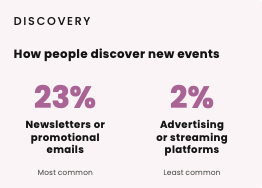
AudienceView’s Annual Ticket Buyer Report found that 16% of buyers would attend more events if relevant options were easier to discover. It also found that 9% had abandoned a purchase because of a frustrating online experience. These figures point to an important growth opportunity: help people quickly understand what is available, why it is relevant to them, and what they need to do next.
Review the journey from the perspective of someone with no prior knowledge of your venue or event. Use plain language, explain the experience, make dates and ticket options easy to compare, and remove unnecessary steps. A connected AudienceView platform can help align ticketing, marketing, CRM, and audience intelligence so teams can create a clearer journey from discovery through purchase and future engagement.
Use New Marketing Channels to Reach New Audiences
Traditional channels may continue to perform well with established audiences, but audience growth often requires reaching beyond the places and messages that already work. Reaching new people often requires testing different messages, formats, partnerships, and places of discovery.
Consider community organizations, creators, local businesses, schools, universities, and cultural groups that already have trusted relationships with the audiences you hope to reach. Pair those partnerships with content that lowers the barrier to entry. Behind-the-scenes videos, first-timer guides, short artist introductions, and clear explanations of what to expect can make live events feel more approachable.
Channel choice should follow audience behavior, not habit. Test where different segments discover events, how far in advance they decide, and whether they prefer email, social content, search, or direct recommendations. Then compare not only clicks and sales, but also first-time attendance and return behavior.
Build Confidence, then Earn the Return
Sustainable audience growth also depends on what happens after discovery. New audiences are more likely to commit when the experience feels credible and consistent. In the same AudienceView research, 56% of ticket buyers said they preferred buying directly from the venue or organization, while 49% avoided websites they perceived as untrustworthy. Clear branding, transparent pricing, accessible information, and a consistent path to purchase all help build confidence.
After the event, continue the relationship with communication that reflects what the attendee actually experienced. Thank them, invite feedback, recommend a relevant next event, or explain other ways to participate. The most effective follow-up feels like a continuation of the experience, not a generic sales message.
Sustainable audience growth does not mean leaving loyal patrons behind. It means using what you know about strong audience relationships to open the door wider. When acquisition, digital experience, and retention work together, every first visit has the potential to become a lasting connection.