A chargeback is a visible cost of ticket fraud. A payment is disputed, revenue is at risk, and your team has to investigate. But the sales impact can begin well before a chargeback appears.
During a high-demand on-sale, bots and resellers can compete with genuine buyers for inventory. A legitimate purchase might be declined by a fraud rule. A ticket buyer who believes an event has sold out may look elsewhere or give up altogether. None of those experiences necessarily shows up as a fraud loss in a payments report.
The revenue question is bigger than “How many fraudulent transactions did we stop?” It is also “Could genuine buyers get through to purchase?”
When inventory doesn’t reach genuine buyers
Tickets are a limited resource. Bots, coordinated purchasing, and large-scale bulk buying can allow resellers to secure inventory before genuine customers have a chance to purchase. Some activity may also involve stolen payment credentials or attempts to bypass purchase limits.
When those tickets reappear on secondary marketplaces at higher prices, ticket buyers face a different buying experience. They may assume the event has sold out, pay more through another seller, or decide attending is no longer worth the cost.
Resale itself is not necessarily fraudulent. The concern is purchasing activity that exploits the sales process, bypasses controls, or uses fraudulent payments to capture inventory.
That activity can affect an organization even when no chargeback follows. A reseller’s payment may be valid, while the way they acquired tickets still limits access for other buyers. The original sale may generate revenue, but it can also move the attendee’s purchase away from the official channel, complicating communication and weakening the organization’s opportunity to build a direct relationship.
For ticket buyers watching tickets disappear and quickly reappear at inflated prices, the experience can also undermine trust in the on-sale and their willingness to try again.
Blocking the wrong buyer can cost a sale, too
Stopping suspicious transactions matters, but a fraud program also needs to recognize legitimate customers.
A genuine buyer might behave in a way that looks unusual to an automated system: purchasing from a new location, using a different device, or trying again after a payment error. If that buyer is incorrectly blocked and cannot resolve the issue, the organization risks losing a valid sale.
The goal is to make better decisions about transactions: stop risky activity early while giving legitimate buyers a clear path to checkout. Reviewing declines, buyer complaints, and fraud rules helps teams see whether protections are working as intended.
The impact can extend beyond the ticket
A ticket sold to a genuine attendee can lead to more than admission revenue. That person may purchase food, drinks, or merchandise. They may become a member, bring friends to another event, or return next season.
Those future purchases are not guaranteed. But when genuine ticket buyers are shut out—or have a poor experience with an invalid ticket—the organization loses the chance to build that relationship.
Fraudulent listings can also damage confidence in an event. A buyer who sees tickets vanish from the official site and reappear at inflated prices may feel the on-sale was unfair, even if the organization did not create that situation. That perception can affect whether they try to buy again.

Chargebacks tell only part of the story
Chargebacks remain an important measure. They show disputed transactions, potential revenue loss, and the staff time needed to resolve claims. They do not show every point where fraud may have interfered with a sale.
To understand the broader picture, look at signals across the buying journey:
- Did unusual purchase or inventory activity occur during a major on-sale?
- Did buyers report that they could not complete a purchase?
- Were legitimate transactions incorrectly declined?
- Did customers ask whether a resale listing or seller was authorized?
- Did box office staff encounter invalid or duplicate tickets?
- Did those issues appear together around particular events or on-sales?
Ticketing, payments, marketing, customer service, and box office teams may each see one part of the problem. Reviewing their reports together gives organizations a better picture of what genuine buyers experienced.
Protect the path to purchase
The first step is to make official purchase channels easy to recognize. Link directly to them in event promotions and tell buyers which resale options, if any, your organization authorizes.
Next, decide how your team will monitor high-demand on-sales. Identify who reviews unusual transaction and inventory patterns, who can escalate an issue, and how buyer reports reach the right people while tickets are still available.
Fraud protection should support that work without creating unnecessary barriers for genuine customers. For AudienceView customers, AV Payments includes fraud protection and bot attack prevention. It offers options to tailor protections to an organization’s needs, including controls that help teams respond to known fraudulent activity and review legitimate buyers who have been blocked.
After an on-sale, review what happened. Transaction data can show what was stopped; buyer and box office reports can help reveal where people struggled. Together, those insights can guide changes before the next event.
Protect sales before they become losses
The first step is to make official purchase channels easy to recognize. Link directly to them in event promotions and tell buyers which resale options, if any, your organization authorizes.
Next, decide how your team will monitor high-demand on-sales. Identify who reviews unusual transaction and inventory patterns, who can escalate an issue, and how buyer reports reach the right people while tickets are still available.
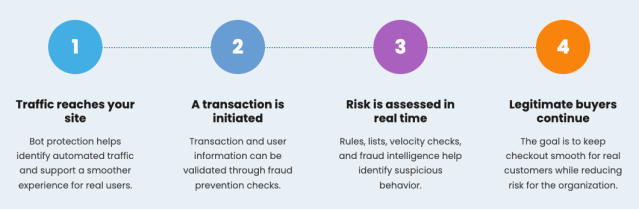
Fraud protection should support that work without creating unnecessary barriers for genuine customers. For AudienceView Unlimited organizations, AV Payments includes fraud protection, bot attack prevention, and reseller management controls. Transactions are evaluated before tickets are issued, helping teams identify and block suspicious purchases before inventory is released. Transaction screening, device and purchasing-pattern analysis, and configurable controls help organizations respond to risky activity while supporting legitimate buyers.
Learn how AudienceView identifies and blocks suspicious transactions in real time, before tickets are issued, payments are processed, or chargebacks reach your team.