Imagine two people considering tickets to the same production. One is visiting the UK in a few months and wants to settle their plans early. The other lives in London and is looking for something to do this week. Both are potential buyers, but they may need to hear about the show at different times and arrive at the booking page with different questions.
For organisations working across multiple venues, productions or markets, that creates a planning challenge. A shared audience strategy can set the direction, but the way people discover and book an event needs to reflect the audiences each experience serves.
Early findings from an AudienceView and WhatsOnStage audience survey show why those distinctions matter.
Reach people when they are making plans
The same West End production can attract people on very different timelines. Among survey respondents under 40, 38.9% of international visitors book four to six months ahead. Only 6.5% of Londoners under 40 book that far in advance.
That gap gives marketing teams two moments to plan for: one while visitors are building their trip, and another when local audiences are looking for something to do soon.
Campaign strategy #1: For visitors planning ahead
Someone arranging a London holiday may want to secure theatre tickets alongside their flights and hotel. Give them performance dates, seat information, and full pricing early, while they’re deciding what the trip will include.
Campaign strategy #2: For local audiences booking soon
A Londoner might see a clip from the same production on social media and consider going this weekend. Show upcoming performances and available seats, with a direct path to booking.
Use these strategies as a starting point. Compare booking windows by production, location and audience group in your own data, then adjust campaign timing to match when each group begins looking and is ready to buy.
Look at how each audience books
The route to purchase also varies. Frequent mobile purchasing is high among respondents under 40 across the regions measured, ranging from 71.6% in South and East England to 85.5% in London. But mobile booking is not solely a younger audience behaviour . Among respondents aged 60 and over, 58.3% in Scotland, Wales and Northern Ireland frequently buy tickets on mobile, compared with 35.6% in London.
Those figures make a useful case for looking beyond broad assumptions about age or location. A mobile booking journey should work well across the organisation, but teams also need to examine their own traffic and purchase data: Which audiences arrive on mobile? Which pages help them choose? Where do they leave?
The answer may differ between a London production, a regional venue and an event that draws visitors from abroad. Understanding those differences can help teams decide where to adjust a campaign, a landing page or the path into checkout.
Make the decision easier once they arrive
Reaching someone at the right moment is only part of the job. Buyers also need enough information to decide whether the experience is right for them.
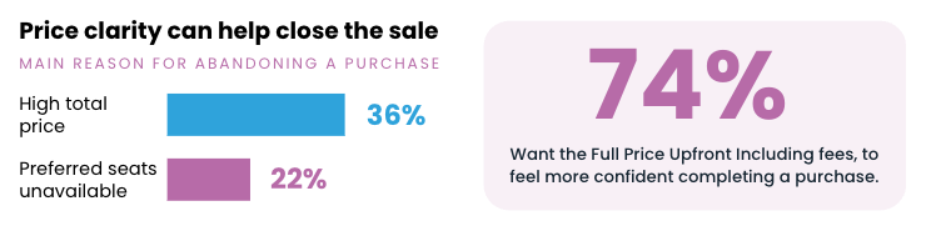
In a first look at the 2027 UK Ticket Buyer Report, 74% of respondents said they want the full price, including fees, upfront. Another 22% named unavailable preferred seats as their main reason for abandoning a purchase. The WhatsOnStage presentation also found that 85.7% identified interactive seating maps and view-from-seat photos as their biggest confidence driver.
For example, consider a family comparing Christmas theatre outings within a set budget. They find a performance they like, but fees appear only at checkout, and they cannot tell what the view from their seats will be. If their preferred seats are gone, it may be easier to keep looking elsewhere. Showing the full price early, making seat views easy to check and offering suitable alternatives gives them the information they need to choose and the confidence to complete the booking.
Share the insight, then make decisions locally
A multi-venue organisation has an advantage: it can spot patterns across a larger audience. The value comes from making those patterns useful to the people planning each event.
Teams can agree on a common way to measure booking windows, device use and purchase abandonment, then ask more specific questions of each market:
- When do buyers begin considering this event?
- Which channels bring them into the booking journey?
- What information do they need before choosing a date or seat?
- Where do they hesitate, and does that vary by audience or location?
A shared view makes it easier to see where an approach is working across the organisation and where a local team needs to do something different. The aim is to reach each audience when they are ready to consider an event—and give them the confidence to book when they get there.
Want to understand how booking patterns differ across your venues and markets? Connect with our team to explore how AudienceView can help you spot those differences and turn them into more relevant campaigns and booking experiences.
These findings come from the AudienceView and WhatsOnStage UK audience survey based on 1,000+ respondents.